

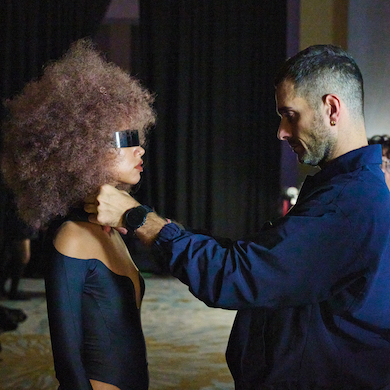
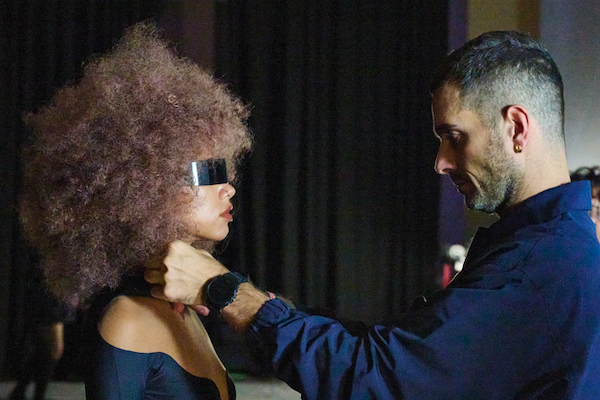
HOB Academy’s creative team made their Canadian debut at the 36th annual Contessa Awards with Infinity, the team’s latest show that celebrates the art and beauty of hairdressing. We chatted with HOB Academy’s Jake Unger and Nestor Sanchez about their presentation, along with Wella Top Artist Dana Lyseng, who was the team’s colour director for the show.
What was the inspiration behind Infinity?
Jake Unger: Infinity has been a show that we’ve done two or three times now, which is quite unlike us as a brand. Usually, we change the show as we go, but we’ve made a conscious effort to take this show around the world. We’ve done it now in London, Japan and now Toronto.
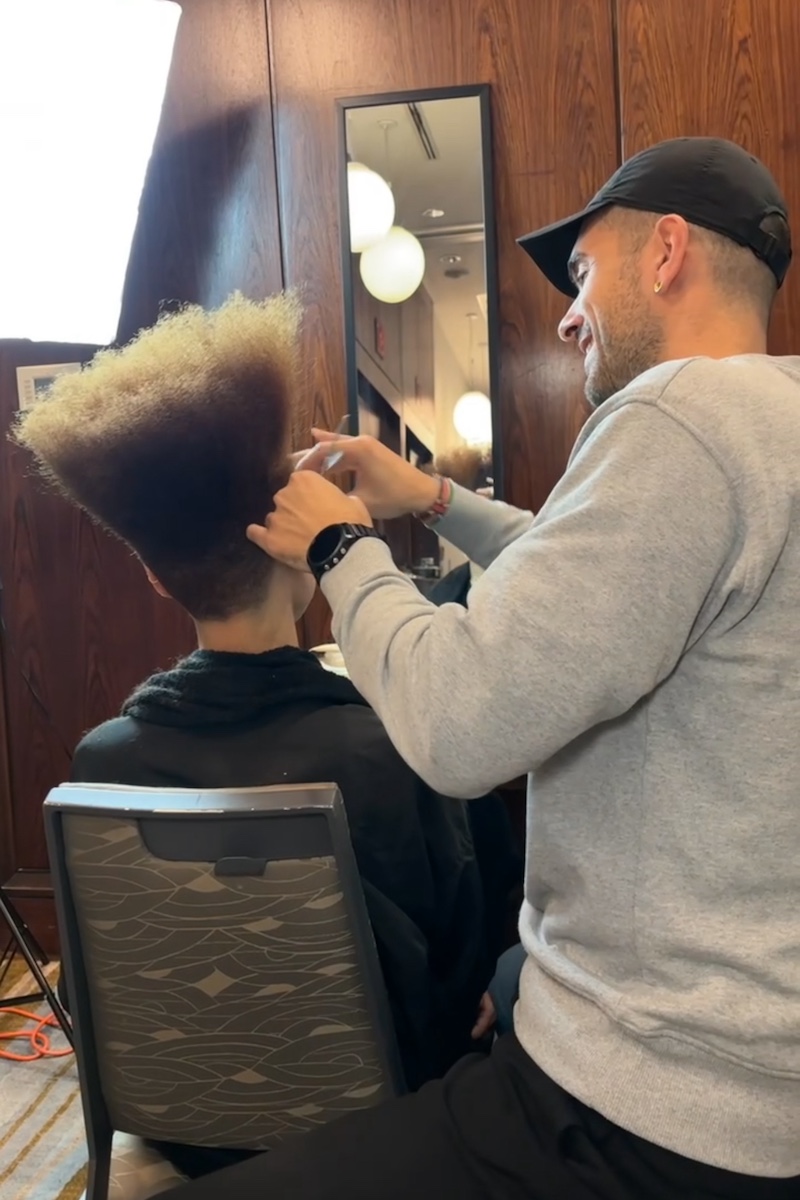
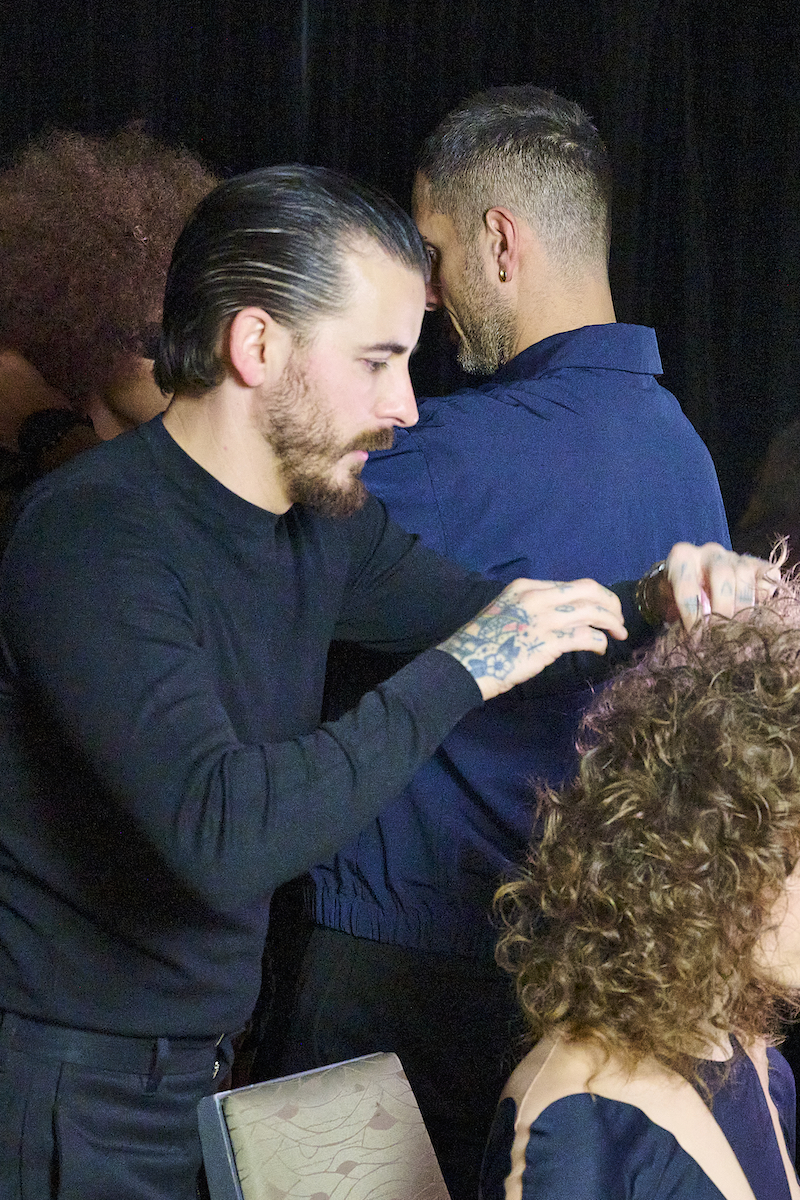
We base a lot of our work on craftsmanship. Rather than having to do the same hairstyles, it’s more about looking at each model and creating a look for them. So it’s not like we recreate the nine looks for Infinity; we look at each model and try and make something bespoke for them.
Nestor Sanchez: It’s almost like a yearly collection that we create and use as inspiration, and we teach the cuts and colours from it.
Jake Unger: The name [Infinity] kind of opens it up a little bit for that. There are infinite possibilities. One of the reasons why we haven’t done a show [that’s identical to the last one] is because we don’t want to have to do the same thing and then six months down the line, you’re doing something that you maybe don’t really believe in anymore.
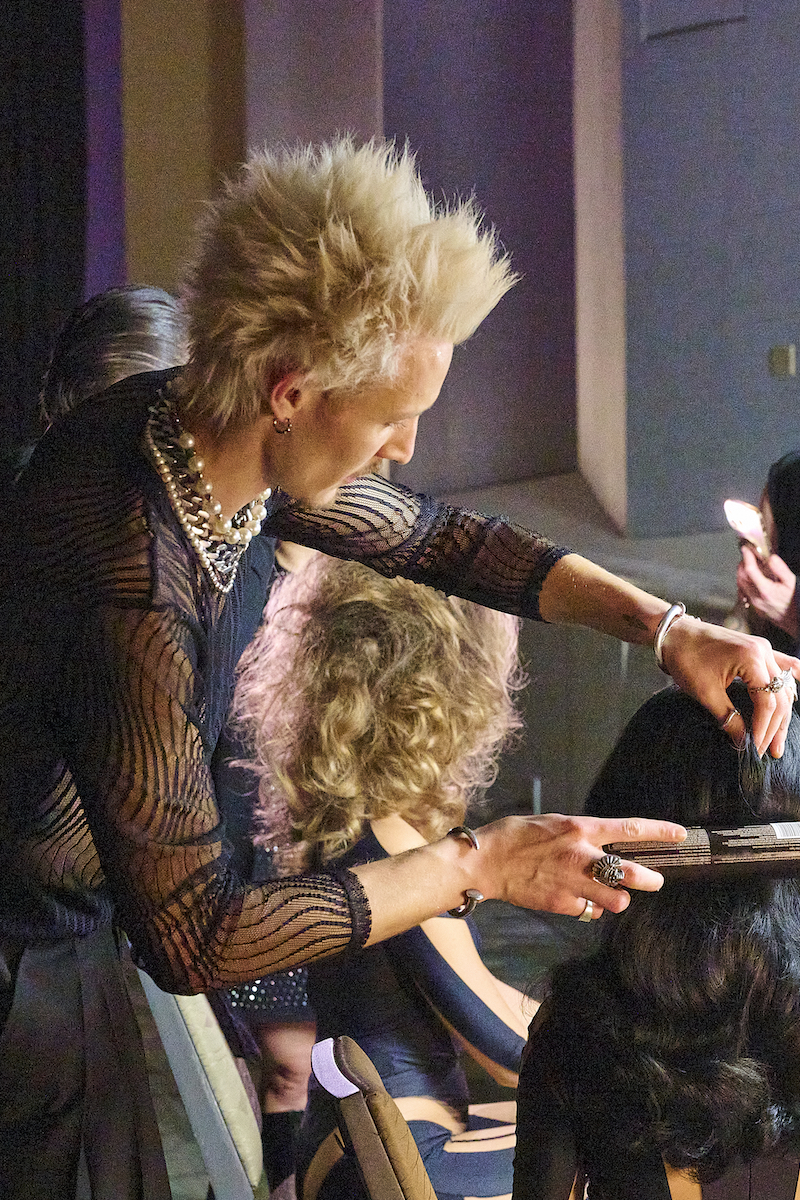
The idea for us at this moment is looking at different textures. We’re looking at still doing some strong geometry, but that could be messed up afterwards to have a little bit more of a gritty, kind of dirtier, grungy kind of feel. In general, our collections tend to have some main pillars in geometry, texture and dressing hair. And obviously colour. I like to kind of hit those four points in hairdressing.
Would you say that the inspiration for each show comes from the models?
Nestor Sanchez: I think that’s number one. To be honest, we’re calling it Infinity just because we had to give it a name, but we normally, as you say, go by the model. The model is everything; the model gives you the inspiration for the cut and the colour.
Sometimes we get asked, ‘What looks are you going to do?’ and I say, ‘I don’t know. I haven’t met the model yet’ or we haven’t even done the casting. Whenever we get the models, we get all the inspiration. We normally have loads of references [for inspiration] in our phones. We have a good chat with the models and come to an agreement. We push them to a point where they are happy and we’re happy that we’re going to please the audience. In this case, the audience is hairdressers. Not just any hairdressers, the best in Canada, so we’re hoping to impress.
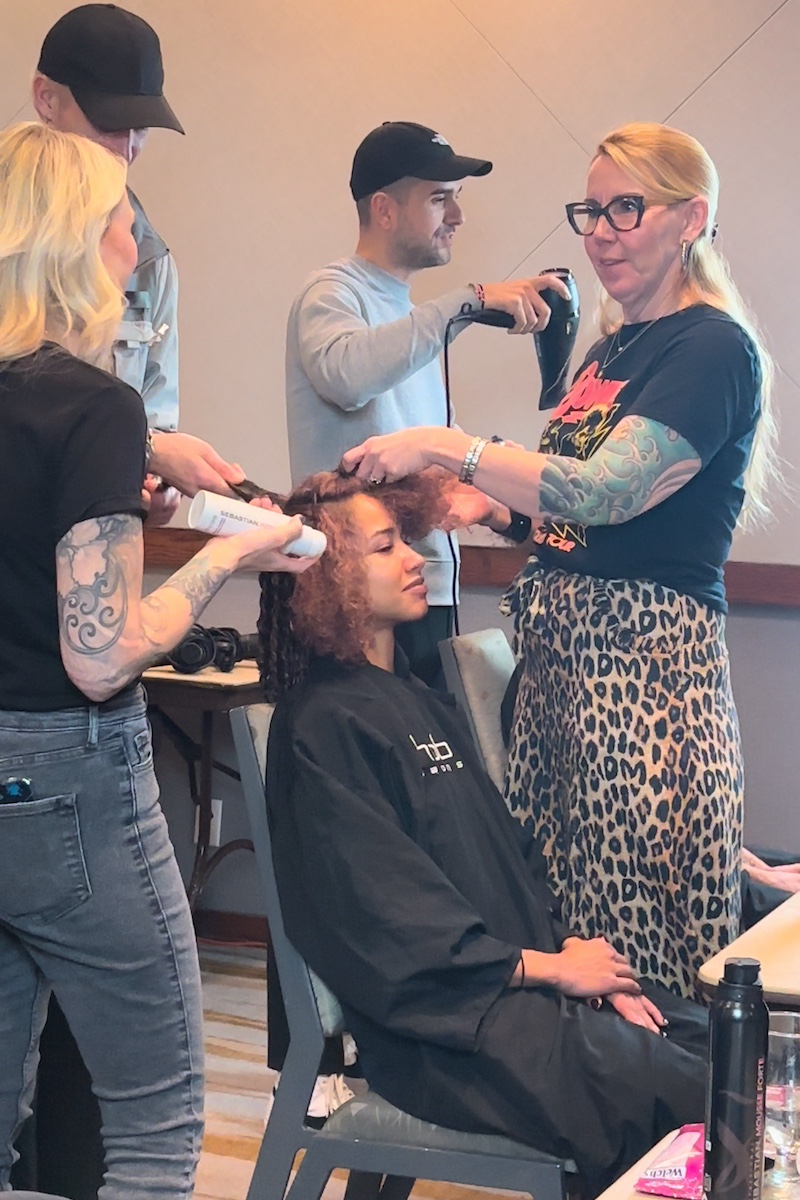
Dana Lyseng: We had an amazing model call. Wella and HOB were very specific about what they’re looking for to make sure that they could take the model with hair to her waist and do a Chelsea [haircut] or create a short fringe and still keep all that length, which is very signature for HOB. It was interesting to watch them navigate, and the fact that we have no backup for wigs and extensions, which a lot of people do coming into a show like this. When you’re working wiht wigs, you’re just looking for good models. HOB needed the great model who was open about the cut and the colour. It was really educational to watch them do it.
I understand that you’re working with the models’ natural hair. How is it to work with the models and have them agree to the changing their hair cut or colour?
Nestor Sanchez: A lot of practice. A lot of back and forth. A lot of making sure that, ultimately, they’re happy and look their best. We wouldn’t do something just because we fancy doing something. We need to make sure that, number one, whatever we do is suitable. We hope that whatever we do is executed to perfection, or as near as we can get, and it’s fashionable; that’s also really important to us. I think that’s what keeps us on top of our game. We take a lot of pride in working with fashion. We don’t just do hair for the sake of doing hair; we make sure that it is relevant, which is important.
Jake Unger: I think it comes back to our teaching. We’ve got this haircut on a show, so it’s very much about looking at each model. And like I say, that is probably one of the biggest skillsets that gets missed in hairdressing. We talk a lot about layering, graduation and lines. We don’t really talk about how we can communicate with someone and get [our ideas] across to make them feel comfortable, sexy and cool, so [they say] ‘You know what? Yeah, I’ve never thought of that before. Of course you can do that with my hair.’ In my opinion, that’s one of the biggest, underestimated kind of tools or skills that any of us have as a hairdresser.
We’ve gone to lots of places around the world where [we see] very conservative looks. One of the most asked questions we get is, ‘How did you get the model to do that? I’ve been doing this client for X amount of time.’ That’s part of the skill; it’s our kind of makeup to be able to have those conversations. As Nestor said, it’s visuals. It’s looking on your phone and talking with confidence. Saying ‘Look, this is how good you’d look.’ And showing each model the right look. It kind of breeds confidence that we talk to her about her personality. Find something that fits with our brand and, most importantly, fits the model’s brand because they’ve got to wear it. We’re doing a show for four minutes; they’ve got to wear it for four months.
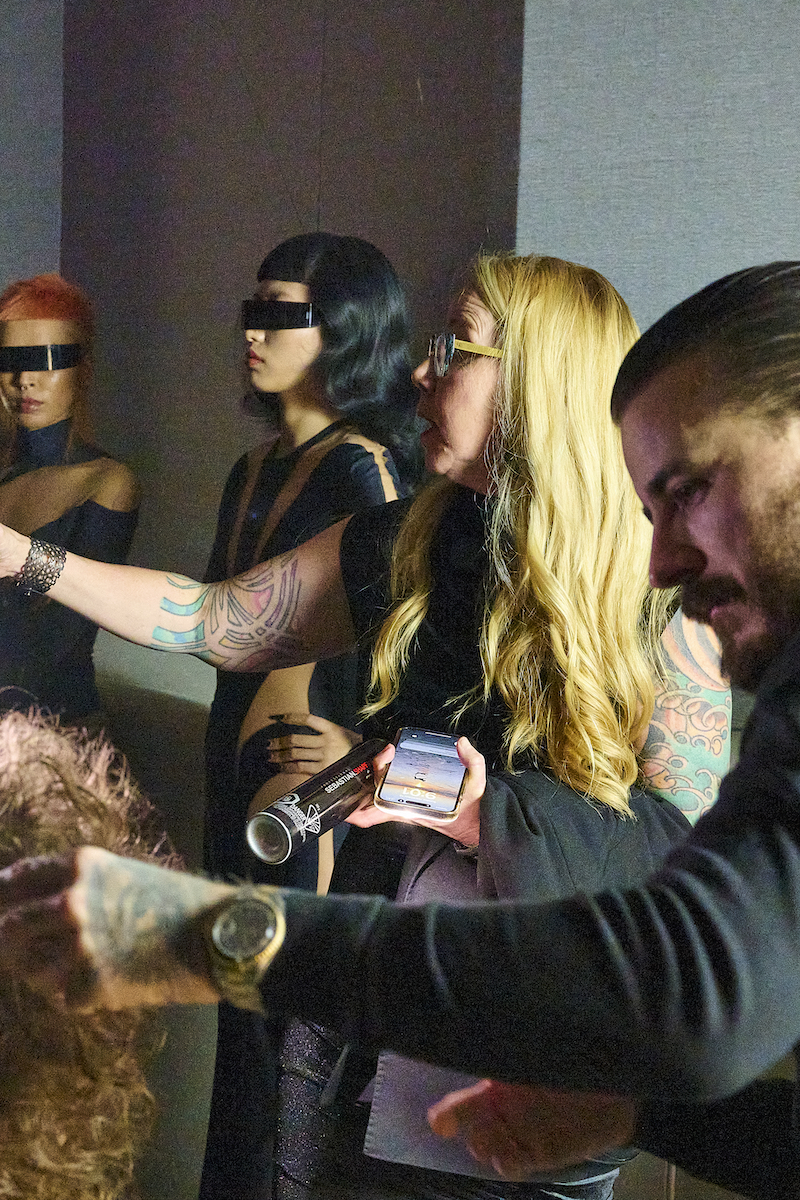
Dana Lyseng: One of the things that I’ve really picked up from the team is that they’re not focused on trends; they’re focused on what colour is going to make this person stand out. What’s going to make this person look amazing, unique and special? There’s been no focus on trends whatsoever.
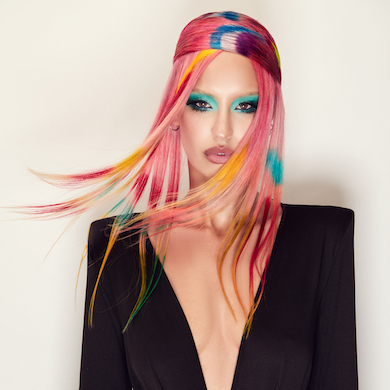
If I lived in England and was a client there, I wouldn’t be going there for trends; I would be going there to be a part of [HOB’s] look and their collection. They definitely have some signatures—there’s always a beautiful poppy red, and paper-white blonde. They definitely have signature colours that you see throughout their collections, but they do not focus on trends.
Tell us about some of the key looks in the presentation. What do you hope people take away from the presentation?
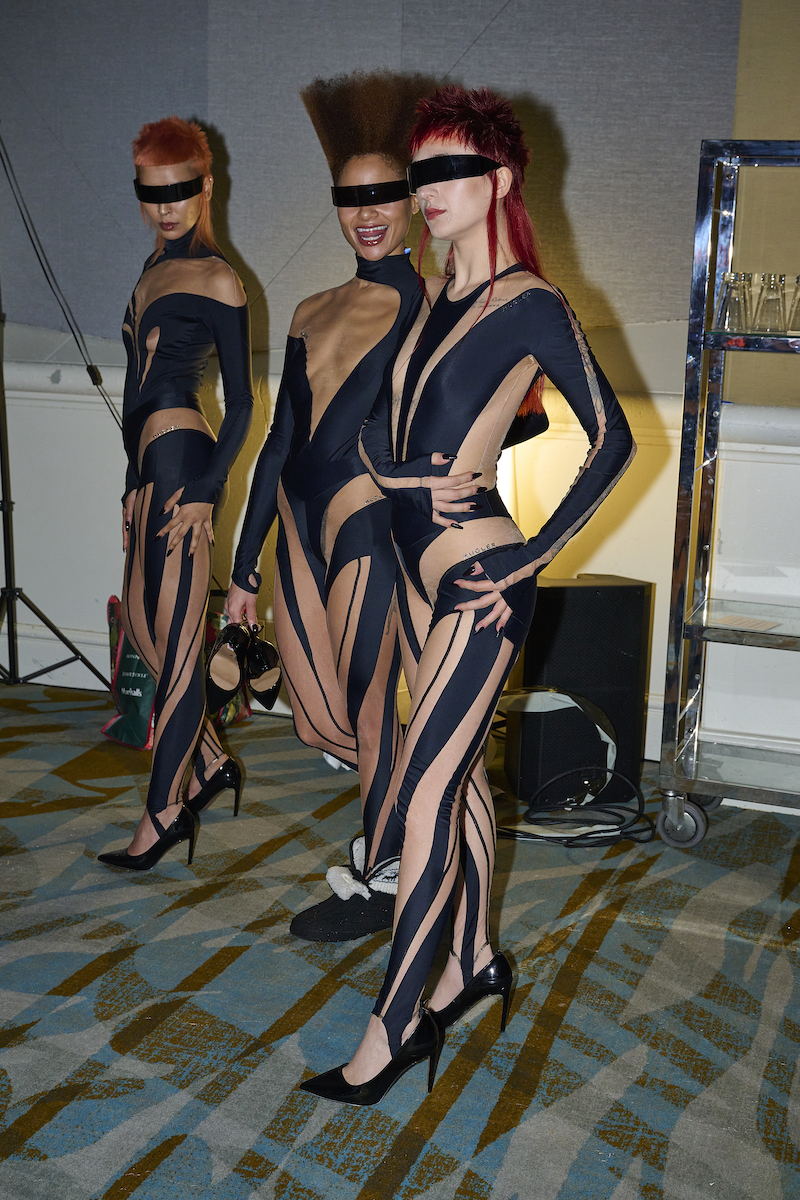
Jake Unger: One of the things that we’re finding very fashionable at the moment is the cool girls in London—mainly East London. Most of their haircuts are starting to come up a little bit, but they’re keeping the backs of their hair. They’re happy to have a short haircut in the front and a longer haircut in the back. Traditionally, that’s called a mullet, but we try not to use those words because, in a consultation, you use the word mullet and everyone’s going to say ‘no’ straight away. But we know that some women are up for a bit of a cool haircut, keeping a little bit of texture or length at the back. So, we’ve got a couple of those. We’ve got a couple of dressings and something that is more salon-friendly. Nestor has done an incredible short precision haircut with some crazy colour as well.
What we like to do is have a think about who’s in the audience. We’re hairdressers, but some of those hairdressers are going to really love precision, and others are going to really love commercial work. Some of them are going to really love sexy blow-dries. Some of them like bright colour. We want to try and create something for everyone to say, ‘I love that one.’ But I think we can do everything, and that’s what we tried to do with each kind of collection or tour that we’ve done.
Dana Lyseng: The HOB team has such a strong signature. It’s really unique. We’re taking classic ideas of traditional precision cutting but pushing them to the edge. They’re known for making sure that the model looks beautiful, and the haircut is amazing. Then, the colour comes in. The haircuts are amazing. You’re going to see everything from things that are a little bit more classic to things that are a little bit more avant-garde.
If there’s anybody in the room who doesn’t know about HOB yet, I hope that they learn about them and understand that not everything has to be wigs, extensions and out of this world. What they’re putting on that stage is what would walk out of the salon, which I also find really fascinating.
That’s why I went to hair school. For me, I have nothing but love for precision cutting, and I think it’s really cool how they take a classic idea and put it in a unique place, which makes it look very avant garde. They’re really doing very classic precision cutting, but they just twist and push it that little bit where you’re like, ‘That’s so amazing!’ It’s really interesting to see a team go up there with all-natural hair. It’s really impressive.
What advice do you have for hairstylists who are looking to take their client to the next level with their haircut?
Jake Unger: First and foremost, whether [you approach it from] the technical side or fashion side, you’ve got to have confidence in it. I think if you’ve got the confidence to be able to say, “Just putting it out there, you’d look amazing with a pixie haircut.’ Or ‘you would look incredible with a bob haircut. Let me show you, this was Hailey Bieber or Kim Kardashian last week’ or whatever you can show and tell that person who potentially uses [celebrities] as a reference. With that said, you can also use the wrong reference and potentially segregate that client. In my consultation, I’ve got a good cross-reference of different references and fashion trends. For me, it’s just instilling confidence to a client that I really know what I’m talking about. I’m not just saying it because I want to do a bob; I’m saying it because I think it’d look amazing.
Most hairdressers just say, ‘So, what are you doing with your hair? What would you like me to do today? Or is it just a trim?’ What we like to do is, ‘Yes, I know you probably want to keep your length, but what can I offer you as different options?’ So it might be a bob or a bang. For me, I need to try and enhance something, I don’t just want to give my clients a trim because if I do, they can go and get that anywhere. You can go to the local supermarket and get the milk that everybody buys, but I want to give you that alternative milk that you’ve got to actually travel out the city a little bit to come and get because it’s so amazing.
Nestor Sanchez: Even if you end up doing the trim, it’s all about how you sell it. People need to become better salespeople and excite the client. Even if you end up doing the tiny little trim, just make it sound like it’s the next big thing you can’t get anywhere else. Let’s be honest, a little trim that you go to a little salon and they charge $20 for, you can go to another salon that charges $200.
People have insecurities. People look at themselves in the mirror every day and see things they wish were not there or were slightly different. So, we can do a great job with hair and hide certain things or enhance certain areas. I do a good analysis and work out the things that they might not be happy with, the things that are amazing, and I try to enhance the things that are already looking good and disguise and potentially change the things that they might feel a little bit insecure about. That’s my biggest trick. As hairdressers, we tend to tiptoe around those things and almost pretend that they’re not there. They’re there and are not going anywhere, so let’s do something about it. Let’s talk about it in a nice way and fix it to make [the client] feel amazing.



Comments are closed.