

Tell us about the inspiration behind your Contessa presentation this year.
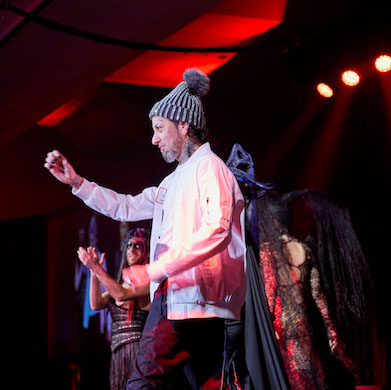
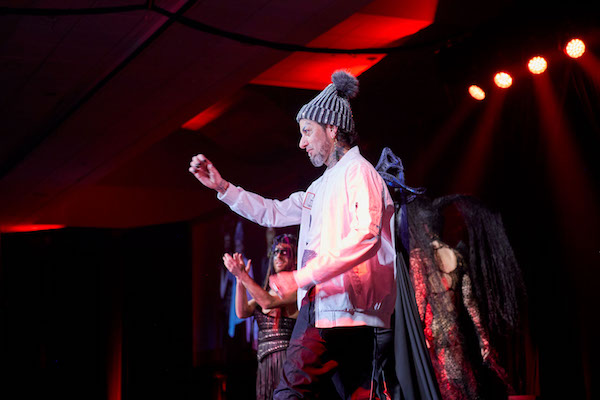
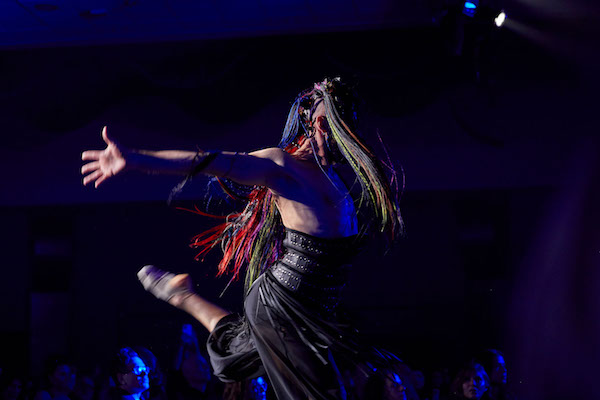
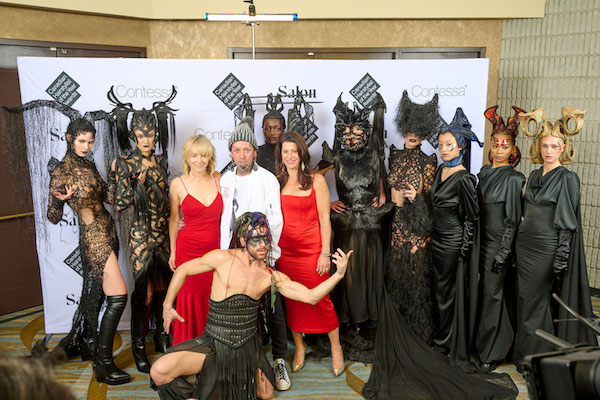
What was important to me was creating a Cirque du Soleil-esque show. We start with this dancer, and he’s a conjuring, voodoo, witchy thing. You can see it in his motions and he’s calling upon the three spirits of the desert. For three of my looks, I took inspiration from the desert sand, sun and nighttime sky. These three spirits have conjuring movements as well because they’re calling on the five Si’lats, which are the five shapeshifters, almost witches in a way.
What is the meaning behind the title of your presentation, Si’lat?
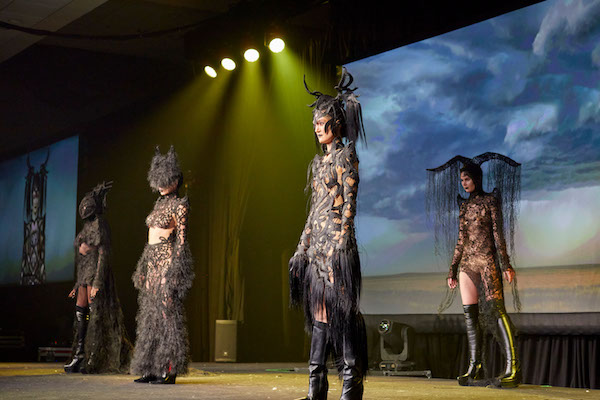
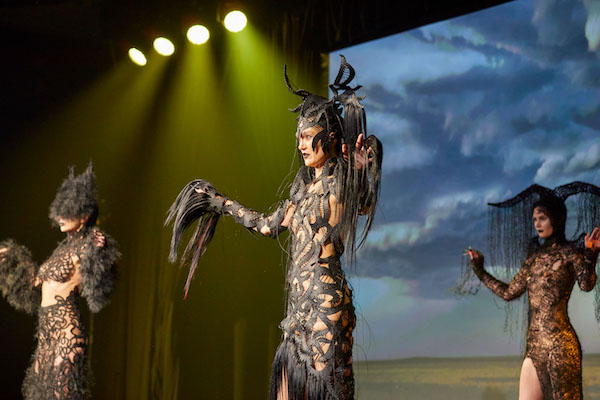
When I was building this show, I looked up dark spirits of the desert and I saw the words “si’lat” and “silas” and it’s this beautiful woman who’s in the middle of the desert who lures you in. She’s also a shapeshifter, so it’s a witchy spirit who can lure you in and then she can switch into another woman. It’s dark, but I like that story.
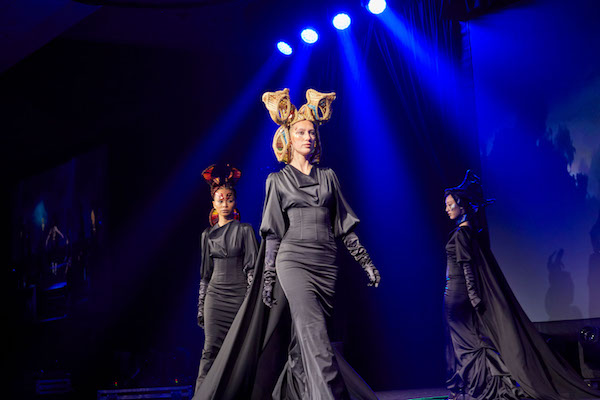
What’s great is that each of my dresses are black and long-sleeved with an open back, but if you look very closely, there’s one little piece of red hair in the dresses. I had that story planned first and it just made sense for it all to go together. So, you have a group of si’lat, but really, it’s only one woman.
How did you plan and develop the concept?
I made mood boards with photos, sketches, and swatches of fabric and I went to the team, like the makeup artist for example, and showed them the vision so they could do their craft and put the other elements together. I wanted them as artists, to share their ideas with me. There were multiple phone calls to explain that I didn’t want a fashion week-inspired show and that I wanted to tell the story with that Cirque du Soleil feel. When you watch the presentation, it’s like watching a six-minute play and that’s what I wanted. I wanted to invoke emotion in the audience.
When you found out that you would be presenting at the Contessa Awards, what was that like for you?
I’ve done many shows like this, but it’s always been a team effort. I would get three models and another artist gets three and we collaborate. When I got the call, I turned to my husband and I told him I got it and he said, “Of course you did, this is your time.” I’ve been doing hair for 24 years and this is my art and my passion. Yes, I work in a salon and I teach, but how often do you get the chance to showcase 10 avant-garde looks, and for the first time ever, get to build my own show? I love collaborating with other artists, but this opportunity—I don’t want to say once in a lifetime because hopefully there will be more—felt like I won the lottery.
Then, came the pressure. Not an “I hope they love me” pressure, but the pressure of the timeline because I get so in the zone. When I got the okay, I knew I wanted to show the audience something powerful.
What are some key messages behind your presentation? What do you hope that the audience takes away from it?
I think what I would love the audience to be inspired by is the art of storytelling. I think that’s really important because when you’re competing in the Contessa Awards and you have three pictures, that’s a story. You need to have a story. And I think I would like to see that come to life. I want them to see that, and I want them to see hard work, dedicated models and a dedicated team.
Tell us about some of the hairstyles and hair pieces in your presentation and how you created them.
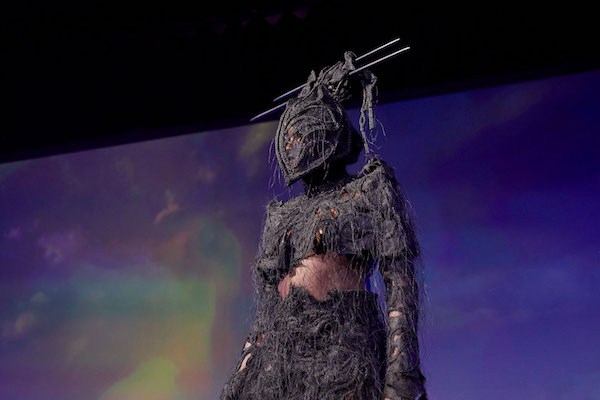
I started with the dancer, and I wanted something tribal. I’m actually colour blind so I don’t do a lot of colour and so I pushed myself to do colour. For the dancer, we have tiny dreadlocks with spots of colour. The dancer is actually bald, so I had to build a helmet for the dreadlocks.
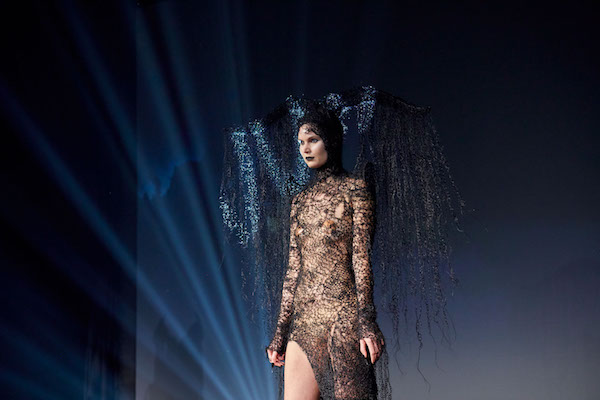
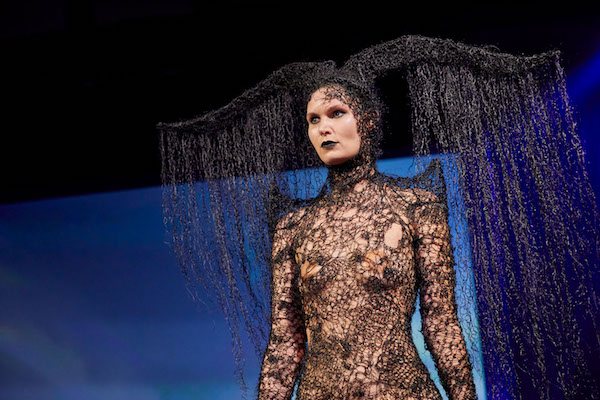
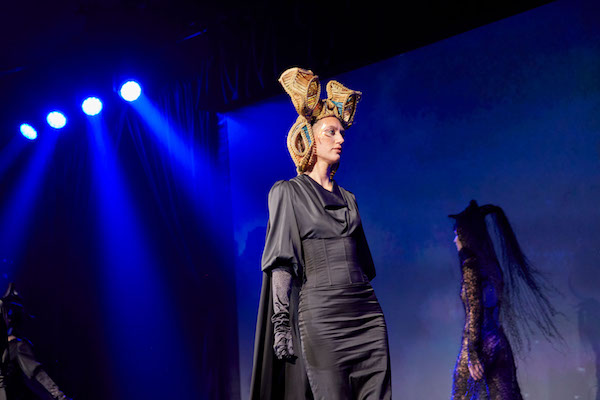
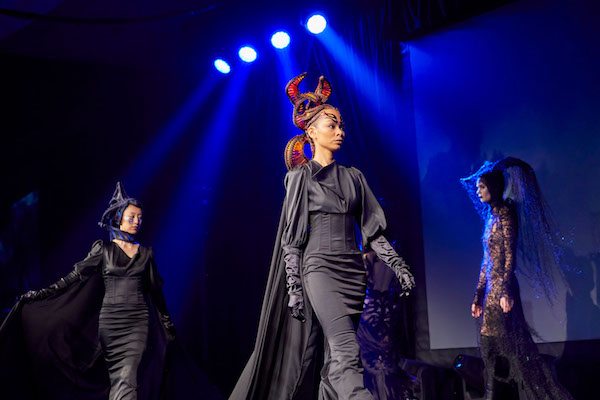
For the three spirits of the desert, I came up with a colour scheme. So first, we have the desert first thing in the morning with the sand, blue sky, desert flowers with hints of pink and auburn. There are also little slivers of mirrors in the hair to represent the mirage. Then, we have the desert as we know it with the orange sky and red sun. We have lots of reds, oranges and yellows with hints of a dark pink and we put slivers of gold mirror. For the last one, we have the desert at midnight with purple, black, blue and little hints of mirror for the stars. All three hairpieces were built using the same techniques but in different shapes. I used a steel wire to build the cage, and Sebastian’s Microfibre to panel the hair across. It was important for me that these three were in form-fitting black dresses so the focus could be on the hair.
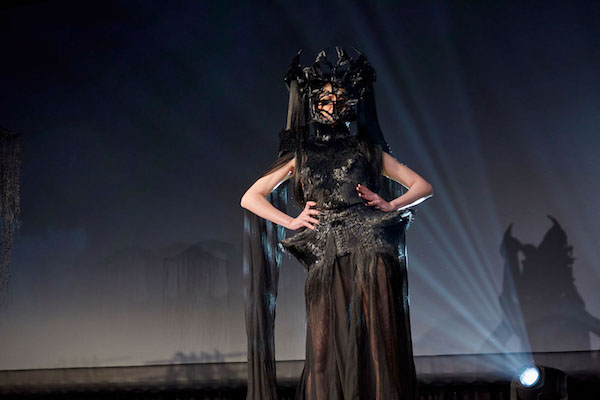
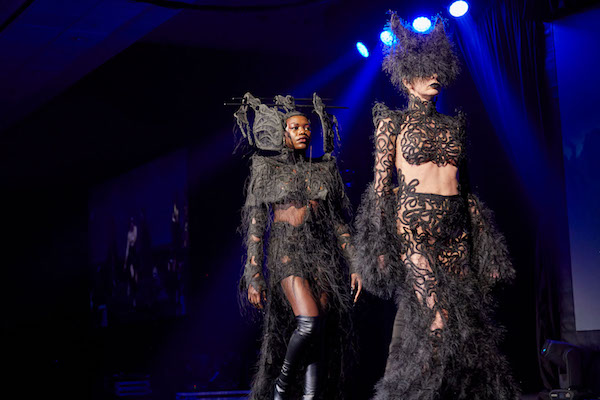
For the other looks, we had very dark but strikingly beautiful and feminine yet very powerful dresses and headpieces. My first dress was made in 2013 and is Maleficent-inspired. I wanted [to showcase both] elegance and anger in the dresses.
For on-stage presentations like this one, where do you get your inspiration from? What inspires your creativity?
I have an art studio called Studio 971 and it’s where I create all of my art pieces and headpieces. But year after year, I’m always doodling. I’m talking six lines drawn in pencil, but I can see something there. I have a huge mood board and I put these doodles up. Sometimes things can be on it for 10 years before I get the opportunity to use it.
I have a tattoo that says, “Those who see the invisible achieve the impossible” and I have this tattoo because sometimes I’ll draw a sketch on a Post-it note or a napkin and it’s invisible, but when I look at that compared to when it’s done, I say “There it is, that’s the impossible.”
I get inspiration all the time and from everything. I could be walking through a park and I’ll see a leaf and I’ll have an idea. I have a collection of thoughts and images on the mood board and you’ll probably see that in a few years.
What do you enjoy most about avant-grade hairstyling? What does it offer you that working behind the chair might not?
I love this question. Avant-garde is art, but it’s my art. I make these things for me. When you walk into an art gallery and a statue is missing an arm or there’s a balloon where the head is supposed to be, somebody might walk up to it and they might not get it. The next person who sees it might be brought to tears because they see something so beautiful. When we get on stage and do haircutting and styling, we speak to our audience, and when we’re in the salon we speak to our clients, but when creating avant-garde work, it’s for me and for whoever connects with it.
Lucky for me, I have a company like Wella and Sebastian who celebrates my art and who finds me opportunities, and now here I am at the Contessa Awards showing 10 of my avant-garde looks, which is unheard of!
This is your first time ever presenting onstage at the Contessa Awards. Tell us what this experience has been like for you. How do you feel showcasing your work on the Contessa stage to the Canadian professional beauty industry?
I think when you create a show that’s avant-garde and work for a company like Wella and Sebastian, who every year have new collections of haircuts and colours, this is not that. This is a collection of my art and because this is the first time I’ve ever done anything like this, I think there’s a little boy inside of me hoping people like it, because it’s my art. I’m extremely excited to show everybody and to be on stage at the Contessa Awards but when it comes down to it, we’re at the Canadian Hairstylist of the Year Awards. That is a group of 1,000 of the best and I’m going to stand in front of them. Half of me is like “Omar, you show them what you got”, and the other half is like, “Oh my god, I hope they like it!”
This is my blood, sweat and tears. And there are certain elements that I’m putting into this that the audience won’t even see. All of the braiding we have to do for under the headpieces, a lot of it is covered. We even had nails and makeup created for this show. Eight months of preparation for a six-minute show. If you blink, you could miss something, but I, being the perfectionist I am, want to create a moment for the audience.
Why do you feel like competitions like the Contessa Awards are so important for the hair industry?
I think that competing is very important for hairstylists because when we’re behind the chair we’re creating something for the client. We have to know who they are and bring something out of them. Doing editorial or competition work, is challenging yourself. I’ve worked with hairstylists who are amazing people and stylists, but they get stuck and their clients all look the same. I’m always encouraging and mentoring people to get out and try something new.
It’s challenging yourself to do something artistic. It’s important because it’s inspiring. There’s a sense of community, too. It’s not just about winning; it’s also about collaboration and learning.
What’s next for you after the Contessas? Do you have any goals that you can share with us or anything new that you’re working on?
My goal, honestly, would be to get these dresses seen on a tour. I could also see these dresses in an art gallery. I got a phone call from RuPaul’s Drag Race and they wanted to use some of my dresses for the show, and I explained that if you made a huge avant-grade gown, it’s more an art piece rather than something you wear. I would love to find a beautiful art gallery with statues and paintings so these dresses and headpieces could be shown off. When these dresses are on stage, the audience is like “Wow, that’s hair. That’s amazing,” but the audience [at the Contessas] is hairstylists, and they can relate to hair being a fibre. When you put these into an art gallery where the audience has nothing to do with hair, the reaction is completely different.
Browse our gallery of images from Antonio’s presentation, and click here to watch the full video.




Comments are closed.