

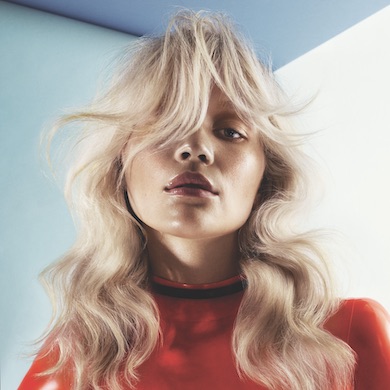
Blonding continues to be a massive revenue driver for salons, fueled by the ever-growing demand for personalized, high-quality results. As today’s discerning clients seek top- tier colourists and stylists capable of delivering on every request (even those that set new trends), it’s crucial to continually evolve and elevate your skill sets to attract and retain valuable clientele.
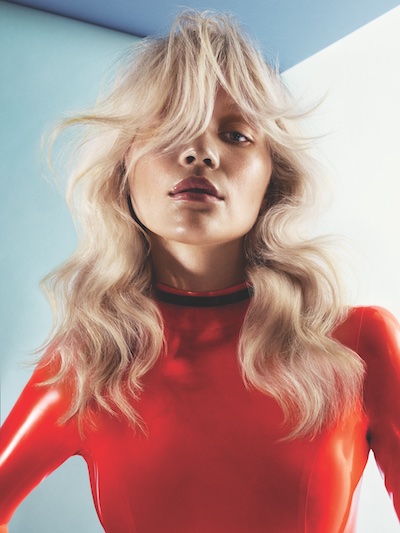
“When celebrities go to an event and their hair looks amazing, we know that colour is going to be asked for in the weeks that follow,” says Micayla Patterson, an Ontario-based stylist at Flaunt Orangeville and an educator for Oligo Professionnel. “Staying on top of education is huge! Making sure l’m up to date on trends and learning new techniques that are efficient and going to give me the most impact in the least amount of time is super important.”
Breaking Down the Trends
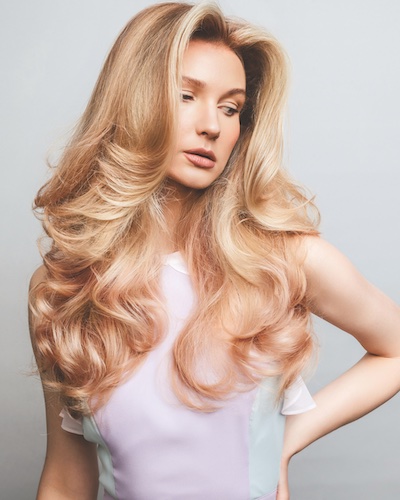
As of late, we’ve seen celebrities, including actress Sydney Sweeney and singer Sabrina Carpenter, continue to keep warmer blondes in demand while stars like Hailey Bieber and Sofia Richie Grange have shifted to a more natural, mushroom blonde. A departure from popular bright and icy blondes, these shades create a softer aesthetic with more subtle and rich tones.
“I’m seeing a lot of these old-money blondes and more dimensional blonding,” says Sheena Bligh, owner of Harlow Gold Salon in Vancouver and a Moroccanoil artistic team member. “Clients are looking to be a bit more on the natural blonde side, which I’m really starting to love.”

She adds that because bright blondes have been highly sought after for so long, she’s welcoming more dimensional looks as a fresh change. In order to achieve these looks, Bligh often turns to a combination of methods. “I’m using a lot of people’s natural hair colour to create pockets of dimension,” she says, adding that she uses a demi- permanent colour to create dimension with lowlights to transition them from chunkier lowlights to a more blended result. While Scandinavian Blonde was the look of last season, it created a harsh grow-out that was not feasible for most clients who don’t necessarily have the time or money to maintain the style, which requires visits every four weeks. In these cases, using softer techniques can be effective, creating a similar effect when pulling their hair back.For those still seeking a brighter blonde effect, there are other ways to get there without a full head of foils.
“It’s super important to soften the regrowth,” says Tammie Axworthy, a Goldwell artistic member and the owner and creative director of The Hair Boutique in Brantford, Ont. “You either want to do a base break on it at the sink, or you can use a brightener, which I always use to boost up the regrowth a little bit.” She recommends adding at least two different tones of blonde to create a look that adds dimension to their natural colour.
PRO TIP
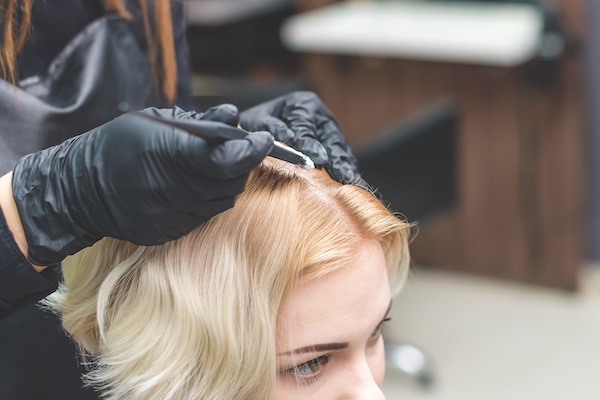
UNDERSTANDING THE DENSITY OF THE HAIR IS CRUCIAL WHEN PLACING YOUR LIGHTENER OR COLOUR SINCE SMALLER SECTIONS WILL COME ACROSS MUCH DIFFERENTLY IN FINE HAIR THAN IN COARSE STRANDS.
Top Techniques
As trends make their way into the salon, foiling techniques continue to evolve, and stylists must stay current to deliver the best, most efficient results.
“I’ve really been enjoying alternating,” says Inez Goodwin, a Redken artist and a manager and blonding specialist at Manhattan Hair Co. in Red Deer,Alta. “Going in between a medium weave, a babylight or a slice gives a lot more dimension.
Sometimes we get scared of doing something because we want it to be really soft and blended, but then you over-highlight and it gets lost a little bit.” Goodwin adds that she’s developed a technique she calls ‘perimeter pop’ for clients looking for a burst of brightness that transforms without the need for dozens of foils. Working on the perimeter of the head, directing everything forward, she adds a bit of teasing and tipping out the ends to create a brighter look.
Similarly, Axworthy enjoys focusing on the front to create a big impact for clients. Using a contour foiling technique to brighten everything you can see from the front, the goal is to contour with foils around the face. “I’ll start with a lower developer, such as a 10-volume, and we’ll start at the bottom, doing diagonal back slices all through the hairline. We do a slice and then a weave. Alternating that pattern builds more blonde rather than just going in with weaves.”
That said, she cautions against going in with full slices because it doesn’t create the same softness and can sometimes lead to visible lines. Instead, she advises using alternating techniques to give the hair some lightness, and when you get towards the front, shift to a diagonal in the same pattern of weave and micro-slice for more dimension.
As for clients looking to explore blonding for the first time, Bligh utilizes a piggybacking technique that helps improve efficiency while providing dramatic impact. “What I do is I piggyback the foil, meaning that for every one foil they do, I do two; I do my first foil with whatever sort of highlight I’m going to do, and I give that a soft tease,” she says. “Then, I pick up all the hair that I left out of that foil—I call it my piggyback—and I give that a bigger tease before I paint it. That is what gives me really high-impact blondes without having to do two sessions.”
“BLONDING SERVICES ENCOURAGE CLIENTS TO COME BACK IN FOR TONING SERVICES TO REFRESH THEIR COLOUR. IT’S AN INVESTMENT, WHICH, IN TURN, GENERATES MORE MONEY FOR THE SALON.” — CHRISTOPHER MAROUN, OWNER OF SALON CHRISTOPHER’S AND SCHWARZKOPF PROFESSIONAL BRAND EDUCATOR, MONTREAL
Toning Tips
With blonding, toning is essential and can make the difference between an average and incredible service. While creating a set of go-to formulas can be helpful for consistency, stylists can sometimes get into the groove of using their favourite formulas on too many clients, neglecting the customization that will help elevate the service.
Patterson recommends discussing your client’s lifestyle, including how much time they spend styling their hair, in the sun and even how often they wear their hair up or down, in the initial consultation to have a better understanding of the overall service.
“If I’m blonding someone and they’re outside a lot, I like to put a clear gloss toner over what I’ve already toned, similar to a top coat on your nail polish,” she explains. “If I know they’re washing their hair often, putting a clear gloss helps me seal it in a little bit longer so that they’re getting the most out of the money they’ve invested in their service.”
As trends shift to a warmer honey tone, stylists have developed new strategies for clients to maximize the colour and shine of the hair, bringing out the gold and accentuating the warmth. While newer stylists can sometimes fear this warmth, Bligh suggests embracing it strategically.
“If you want a bright blonde, you need gold because it reflects light, whereas ash absorbs light,” she explains. “That’s a huge learning curve for people because lots of new stylists are scared of gold. I put a dash of it in every single formula I use.” Another concern for newer stylists is overtoning. Because it can be a delicate balance to find the right shade, Axworthy suggests erring on the side of caution.
“A lot of times we end up with uneven tones because there are many different processes going on in the hair. And one of the most important things to do is even out that porosity before you do the toning.” She recommends using a system equalizer spray to even out the porosity prior to toning.
Because overtoning can happen to the best of us, Christopher Maroun, Montreal-based owner of Salon Christopher’s and a brand educator for Schwarzkopf Professional, recommends having a ‘first-aid kit’ on hand to eliminate emergencies at the sink.
“[Overtoning] happens,” he says. “That’s why we have detox shots you can mix with the treatment and within five to 10 minutes, whatever toner you put on will slide off. It’s one key product that I always have in the salon, and I believe every salon should carry it.”
Tools of the Trade
Having tools that provide precision and consistency benefits can set you up for success. Axworthy suggests using Framar’s Bleach Blenders, which are fluffy textured gloves that help remove lightener without friction. “A lot of times when you’re fully blonding hair, it can take an hour and a half to get on. By the time you’re done with the last piece, the bottom (or first pieces) are ready to come out. So you can take the foils out with Bleach Blenders that wipe off the bleach, and it dries it so it stops working. That way you can get your proper processing time for each section.”
While certain tools, such as a colour board or paddle, can sometimes have a stigma of being used by less experienced stylists, they continue to be a way to keep your application process organized.
“I find that the positioning is very neat,” says Maroun, who uses a board for all of his blonding services. “You use less product and the application is way better. I’ve been using it for a couple of years and can’t work without it.” He adds that if you’re struggling to
find one that works for you, consider creating your own. Maroun worked with a custom plexiglass company in his area to create a board that met his needs with custom sizing and measurements.
Going back to the basics can be an excellent way to ensure precision for clients. Recently, Goodwin has gone back to using a scale to measure exactly what she needs, a practice she hadn’t used since her early days. “I was 100 per cent one of those people that would just use a scoop and eyeball it,” she admits. “When I actually started to slow down and weigh out my product, I noticed a huge improvement with my outcome.”
She adds that being intentional with your tools can also help with better margins in the long term as you aren’t having to replace supplies as often. Goodwin has started mixing with a plastic whisk as opposed to her brushes to keep her tools pristine.
“Over time, if you’re continually mixing with your brushes, they get frayed and bent,” she says. “Especially if you’re doing hair-painting techniques, you want your brush to be nice and stiff so you can get that beautiful sweeping motion. If it’s looking like an old broom, you’re not going to get the same effect and it’s going to look messy.”
In addition to the benefits of having a range of lighteners that vary in strength, lift and consistency (powder, cream and clay), experts also recommend using different types of foils. Axworthy uses six types of foils, all of which perform a different role, ensuring that she’s always using the right one for the job.
The Truth About Texture
In his business, Maroun often works with clients who have curly, textured hair and share his own Lebanese background. For this type of hair texture, he prefers a zigzag method when foiling.
“Instead of doing big weaves, zigzag gives you more of a natural, sun-kissed look,” he says. “So it doesn’t look like you have a lot of highlights and it gives a nice look overall. It’s a technique I’ve been using a lot lately.”
Goodwin, who specializes in curly and textured hair, also uses the zigzag technique on her clients, emphasizing triangles to create a multidimensional, natural-looking effect. “A big factor in doing any type of curly colours is really understanding what their curl pattern is,” she says. “I like to use a lot of triangles when I’m working with curly hair. I don’t just mean a triangle section; when I’m doing a foil, I’ll do a zigzag instead of a straight section because we know the hair already has a lot of movement. It has a lot of highs and lows, so we want to create that within our colour as well. It can really complement the texture they have in their hair.”
Lessons Learned
Although these experts have honed their craft over many years, they continue to learn valuable lessons through experience, their peers and sometimes through trial and error.
“People spend a lot of time trying to make it perfect, and the more perfect you try and make the finish, the more lines you’re going to see,” says Axworthy. “Having regular patterns through the head makes more sense than just doing back-to-back-to-back foils. It doesn’t look as natural. You’ve got to change up your techniques, so try a little bit of teasing, slicing and weaving. When you put that all together, it looks much softer.”
Axworthy adds that using more foils can be beneficial, but only if done properly. “Always lock them in,” she says. “What I mean by that is putting another foil on top of a foil to lock it in. Every time you try to fold a foil that doesn’t have something on top of it, it slides a little bit and then you get bleeding. And the number one thing you have to fix in the sink with blondes is bleeding.”
Another tip to prevent bleeding? When working with long hair, leave the foils long and fold from the sides as opposed to the bottom to reduce heat buildup from rolling and overlapping.
When it comes to beginning a service, Maroun notes that a common mistake he sees is rushing into the foiling process without proper planning. “I find that people don’t section properly and that’s your GPS for your whole technique,” he says. “If it’s not well-sectioned, it can cause confusion and then you won’t be equal on each side. It only takes about 10 minutes to just to make sure that everything is perfect on both sides, as well as the back and front. It’s a preview of how the hair will fall.”
“It comes down to discipline,” adds Patterson. “I’m making sure my foils are saturated and I have clean sections. I have my foils folded neatly as I go, and when I’m backcombing, I’m not overdoing it and making big tangles. If I’m not purposeful about the process, I’m going to have a different outcome.”
Consultations are often an overlooked way to perfect a service, especially with so many variables at play with blonding, including the maintenance commitment from the client. To break things down, Goodwin has a cheeky approach to understand her clients and ensure they’re on the same page.
“I like to ask, ‘How often are we wanting to see each other? Are we going to be newly dating and spend all of our time together or are we long-distance daters or an old married couple that barely see each other?’ Some people want to be in the salon a lot more, but they just don’t have time. I’m basically trying to understand how committed our relationship is about to be.”
PRO TIP
WHILE SOME STYLISTS WILL WET THE HAIR IN AN EFFORT TO STOP THE LIGHTENING OR COLOUR FROM PROCESSING, WATER CAN ACTUALLY REACTIVATE THE PRODUCT AS IT ADDS OXYGEN. UNDERSTANDING THE PRODUCT’S PROPERTIES IS PARAMOUNT TO THE SUCCESS OF A STYLIST, AND ESPECIALLY FOR COLOUR SERVICES.
Long-Lasting Service
Creating an incredible look in the salon is one thing, but ensuring the client loves it between services is another. After all, your name is associated with their hair, and you want to ensure it looks great even as it grows out.
When it comes to maintenance, Maroun has some key guidelines for his blonde clients. “I tell them not to wash their hair for at least two or three days minimum,” he says, adding that as an additional maintenance practice and revenue driver, he also recommends clients come to the salon for a professional tone every six weeks if possible. “It’s an investment to get and keep that beautiful shiny colour they want,” he says. “I always pre-book them after their service for toning. It’s not mandatory, but it’s [highly recommended].” While at-home purple and blue shampoos can be a great way to keep brassy tones at bay between services, with warmer blondes, they can end up leaving the hair too ashy, taking away from the tone you’ve worked hard to create in the chair.
“A lot of people use these shampoos, but I tell [clients] not to use them within the first month because they strip out the toner,” says Maroun.
“People overuse their blonde shampoo,” adds Axworthy. “When this happens, it ends up taking on the ends that are porous, and not taking on the areas that are new and fresh. We have to be careful to educate the clients on how much is too much when it comes to toning.”
Advising clients on the importance of professional haircare and using a colour protection shampoo that stops fading is also key.
“I’m focused on helping clients understand that you’re investing in your hair, so you need to spend a little bit of extra money on your products at home,” says Patterson. “They’re more concentrated, so you’re not going to go through them as fast. While they do cost more, longevity-wise, it’s 100 per cent worth it.”
“AS A STYLIST, IT’S REALLY IMPORTANT TO KEEP UP TO DATE ON WHAT’S NEW BECAUSE, SEASONALLY, THINGS CHANGE, AND WE HAVE TO KEEP OUR CLIENTS FRESH. WE ALSO WANT TO OFFER THEM NEW IDEAS, WHICH IS ONE OF THE MOST IMPORTANT WAYS TO RETAIN A CLIENT.” — TAMMIE AXWORTHY, OWNER AND CREATIVE DIRECTOR OF THE HAIR BOUTIQUE AND GOLDWELL ARTISTIC MEMBER, BRANTFORD, ONT.


Comments are closed.