

Schwarzkopf Professional’s Canadian artistic team took the stage at the 36th annual Contessa Awards to present Interstellar, a show-stopping presentation that took audiences on a captivating journey from darkness to light. We caught up with the brand’s creative content manager Michelle Oliver and national education manager Erinn De Luca to learn more about the presentation’s inspiration.
How are you both feeling about your Interstellar stage presentation at the 36th annual Contessa Awards?
Erinn De Luca: It was a big feat. Seeing that the response from everybody was so positive, it just felt really good. Also, from our team as well. To be able to creatively work together over all of those weeks, we had such a sense of connection and accomplishment at the end of it, so that was really cool.
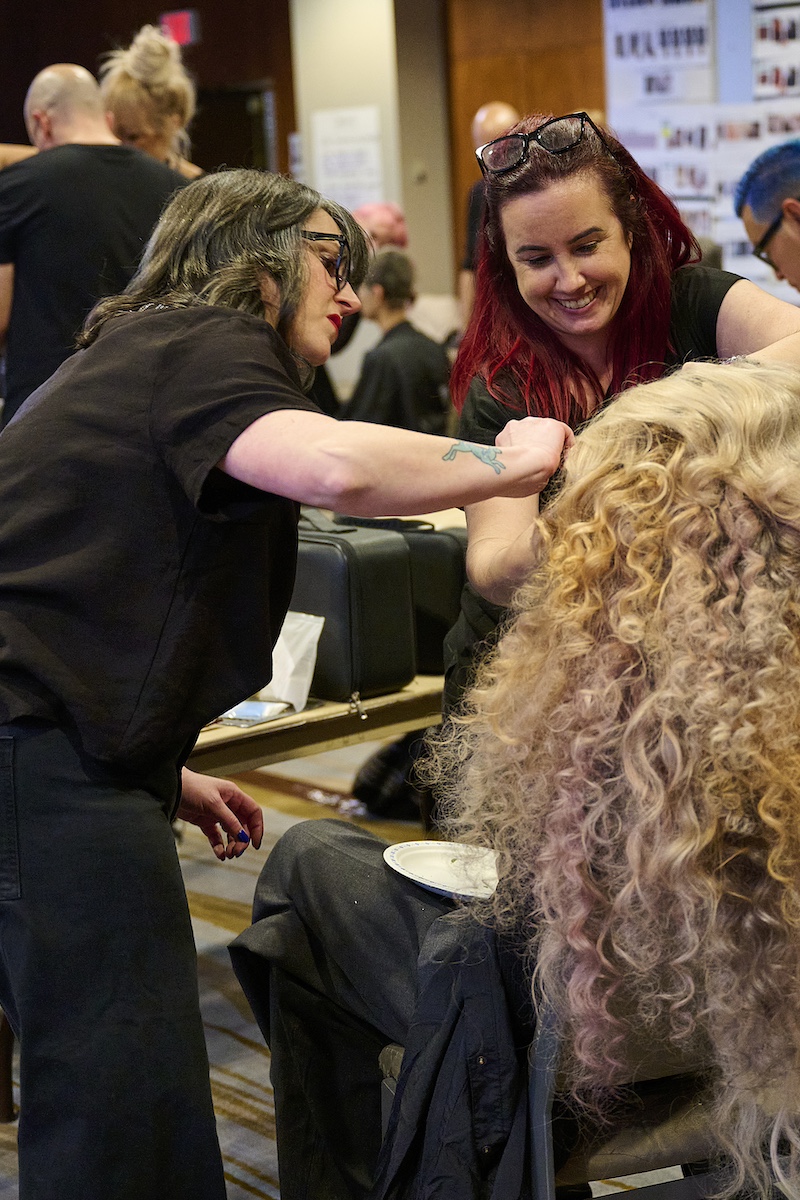
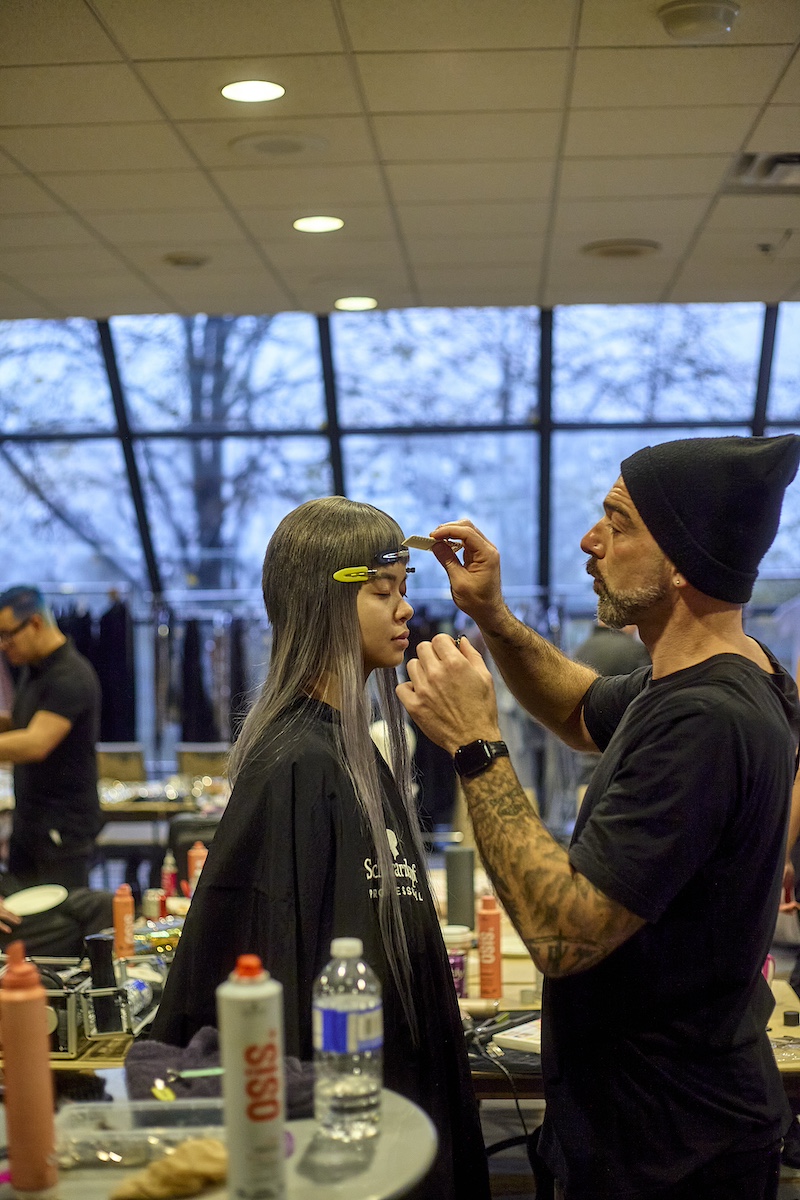
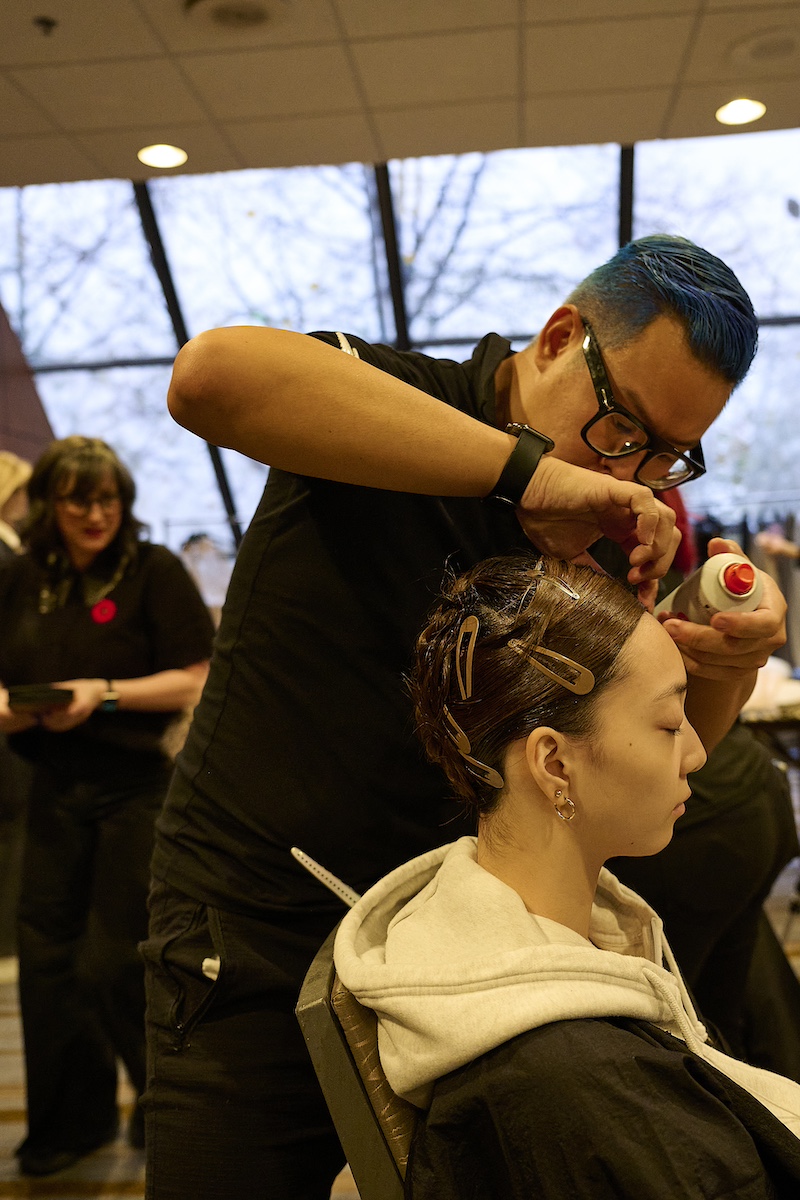
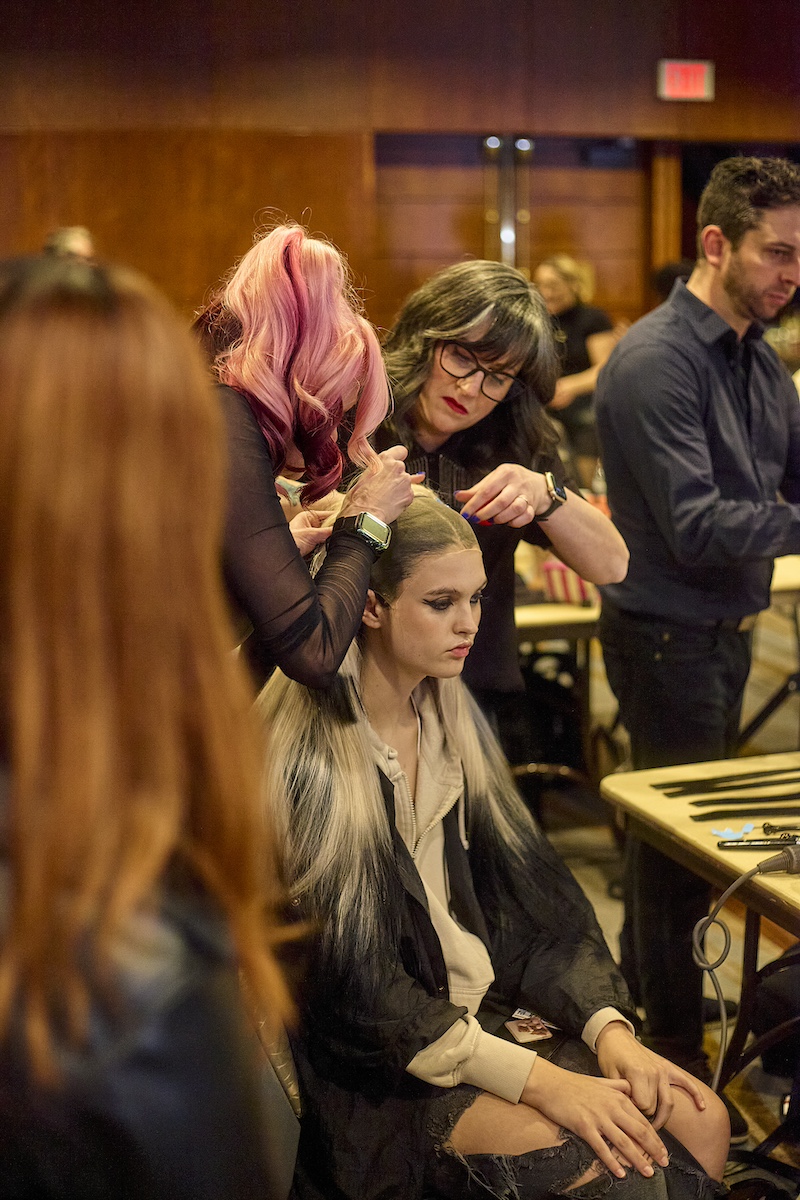
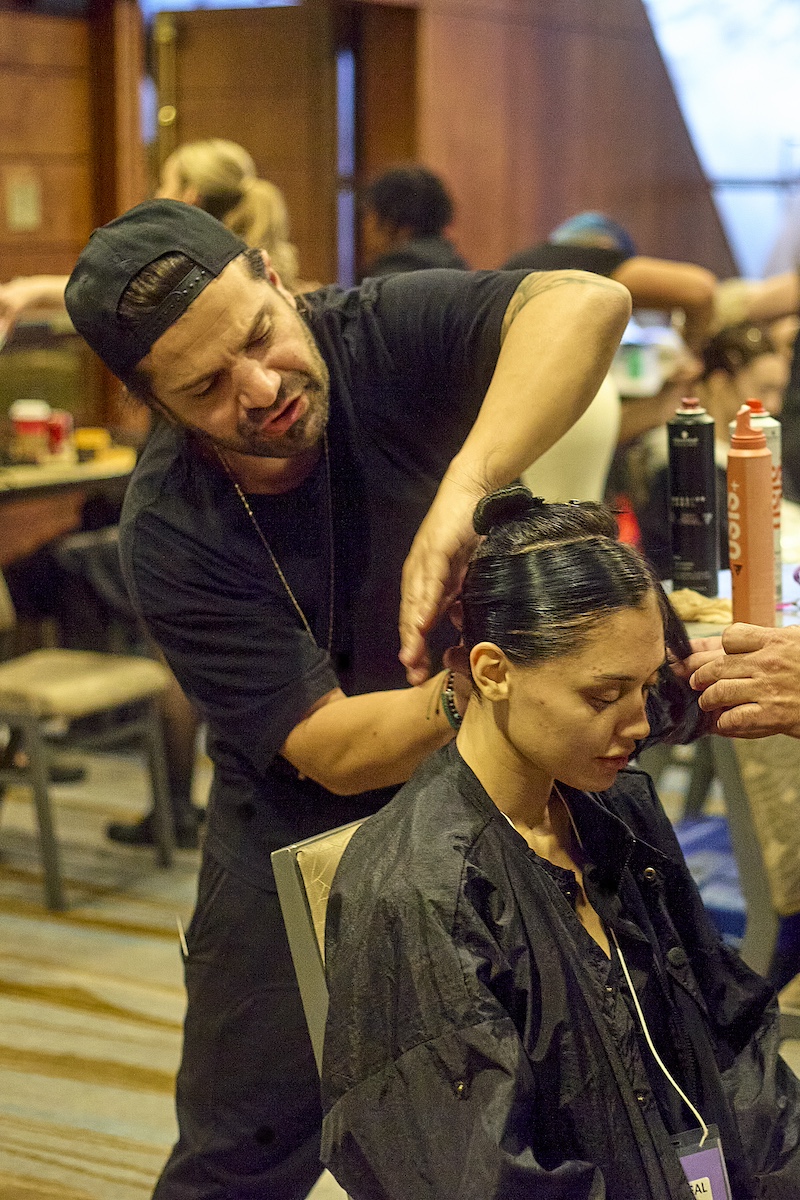
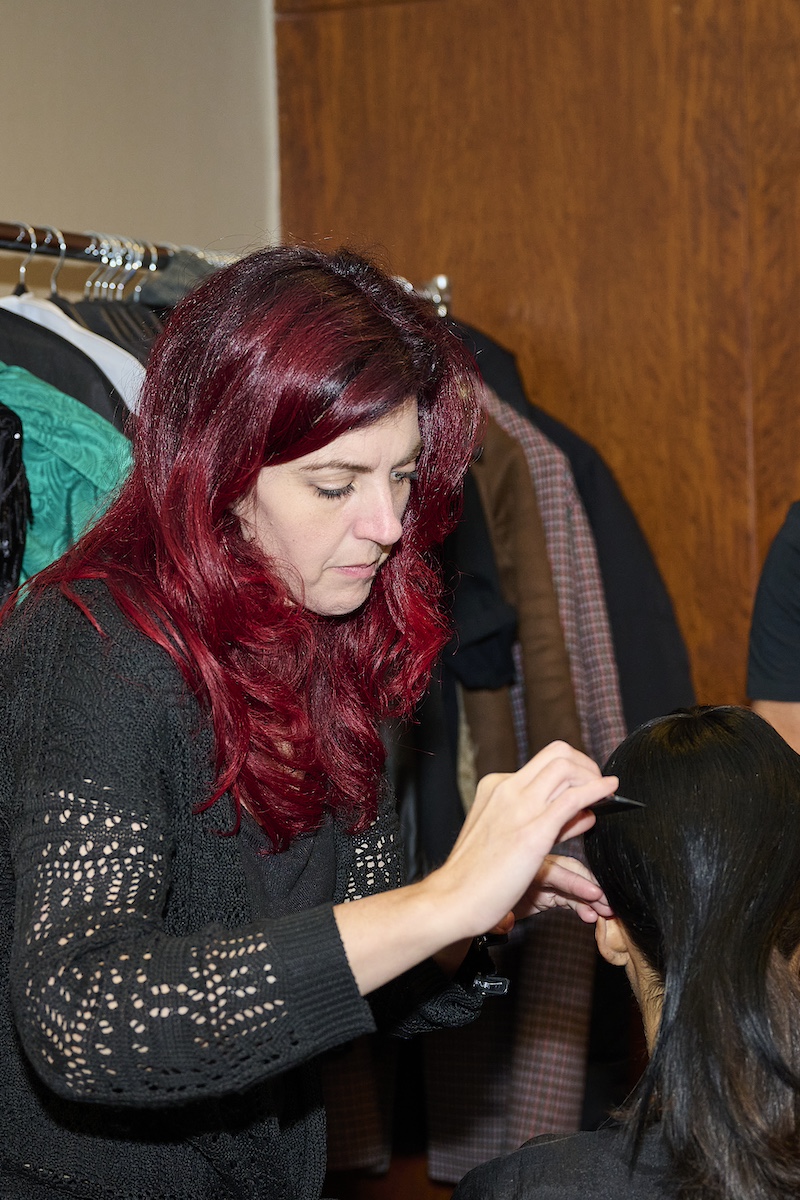
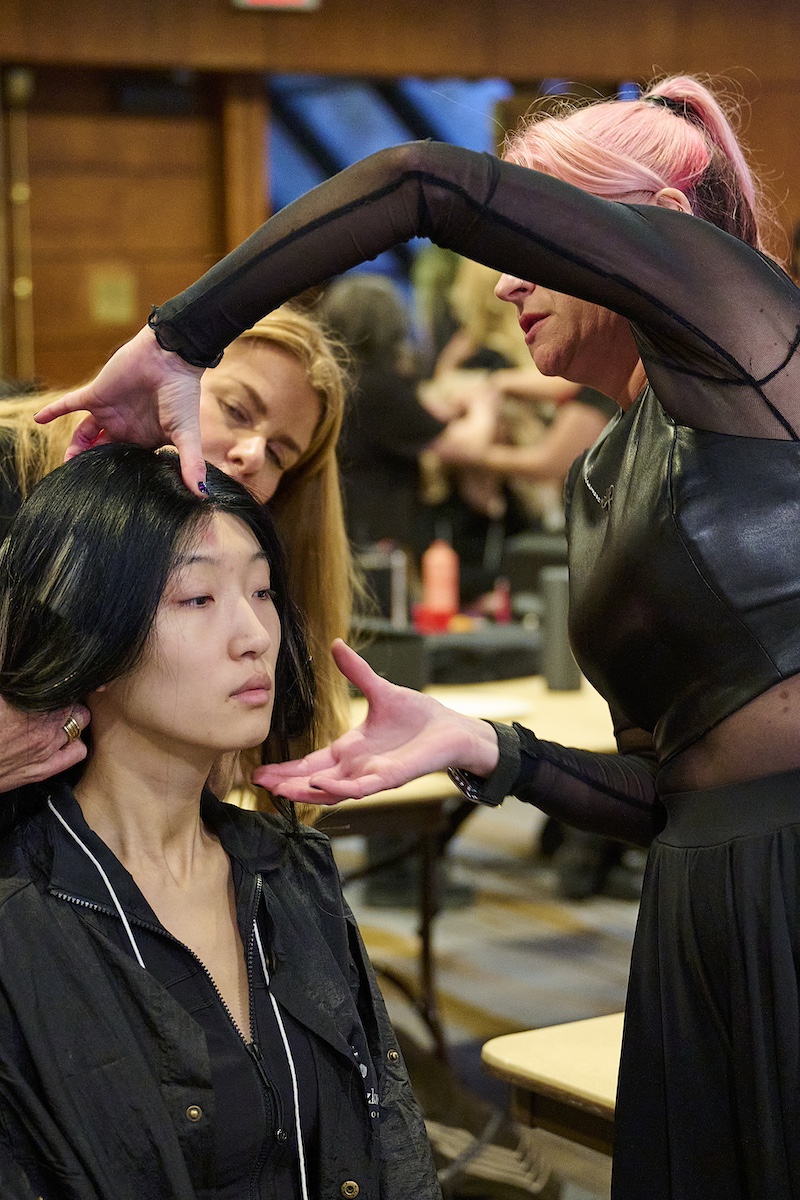
Michelle Oliver: Standing there with our team [backstage] after so much anticipation, and then just being able to view the models entering the stage and some of the effects that were put together—Erinn and I were kind of arm-in-arm, just beaming.
Most of us [on Schwarzkopf Professional’s Canadian artistic team] started as assistants and then grew to become official members of the team. It really has been a lot like a family experience for all of us growing up together.
What was the inspiration behind Interstellar?
Michelle Oliver: The inspiration started with the conversation about how we wanted the experience to feel for the audience. Everything that we put together was about experiencing a presentation and not just watching it, so we talked about how some of the experience can end up really intense sometimes, which is amazing. It builds and builds and builds to something more powerful and intense. What we wanted to do was start really strong and finish in peaceful power. Feeling like your experience went from dark to light— instead of light to dark—was a big piece of our conversation. How we wanted that story to grow and to build these different worlds and then have them come together at the end with something that brought goosebumps to your skin, but also made you feel really calm. The whole thing was beautiful.
Erinn De Luca: With the theme [of this year’s Contessa Awards] being futuristic, we thought about how we can align it with the theme. What’s more futuristic than interstellar travel, right? When you really think about all the advancements lately and the discovery of all of these exoplanets with the James Webb telescope, and realizing just the extent and vastness of the universe and other civilizations that might be out there, it was the perfect way to highlight the story of what different roles might be. That’s how the name “Interstellar” was born.
Michelle Oliver: Also, Dune was coming out with its second film. We know the impact of it on fashion, and it’s futuristic but it also has all kinds of different worlds within it. So we also wanted to incorporate high-fashion and give an experience of not just hair.
Erinn De Luca: We had a lot of pictures of Zendaya on our mood boards with all of her different [Dune: Part Two] premiere outfits. We started to pare down everything into these three distinct worlds: Eclipse, Interstellar and Ethereal. We started with backgrounds, colours, moods, accessories, fashion and then layered in the hair, makeup and everything else that would sort of complement the overall experience.
The last piece that we sort of layered into each one of these mood boards was how we could then make the experience even more immersive by layering in different effects—whether it be with lighting, fog that we had pouring over the stage, or extra haze and wind at the end. You really see movement in the hair and wardrobe that makes you feel drawn more into this world. It was months and months and months of planning and editing, and changing and pivoting of ideas, but I think we got really precise with exactly how we wanted each world to feel. Sometimes, mood boards don’t translate the vision exactly, but seeing it all come together felt like, “Yeah, we did it.”
Tell us about some of the key looks (the haircuts, colour and styling) you created for the presentation.
Michelle Oliver: For the hair, each of the worlds had a different story to it. The overall show is called Interstellar, but we had three worlds: the first world was Eclipse, then we went into Interstellar (which just ended up being the name of the whole show) and finished with Ethereal.
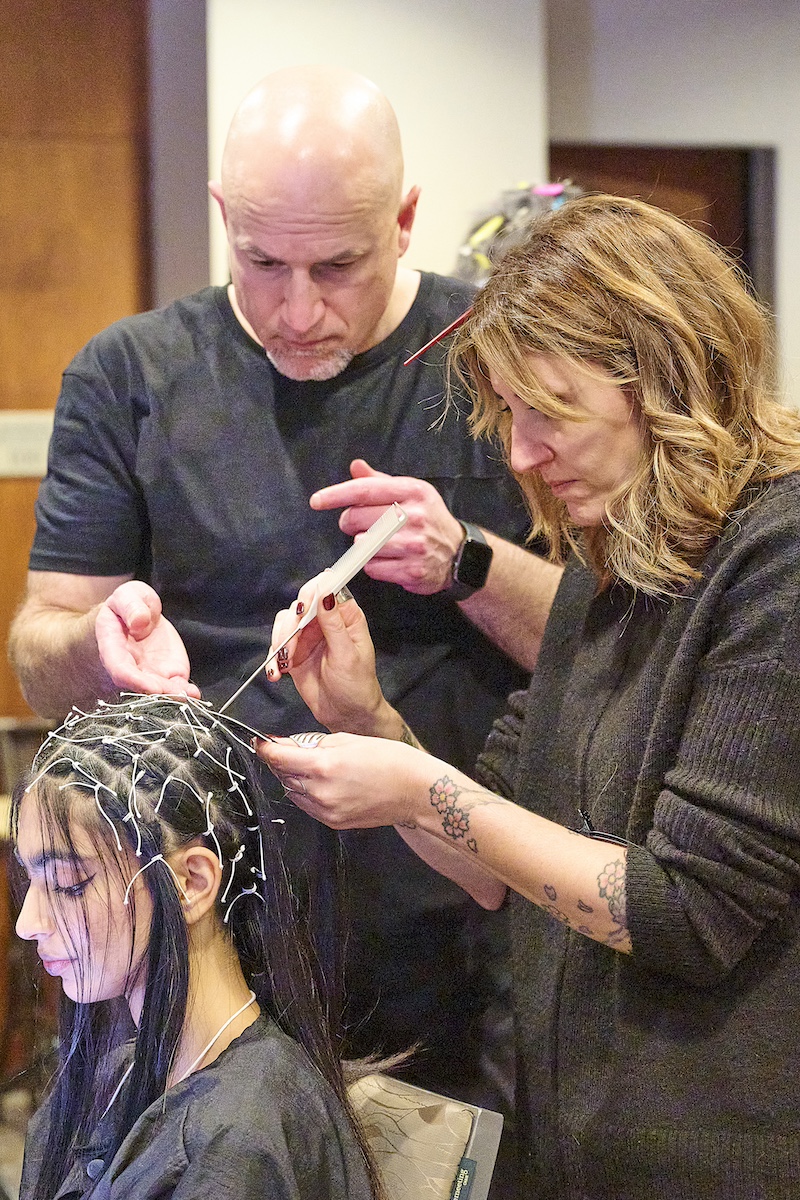
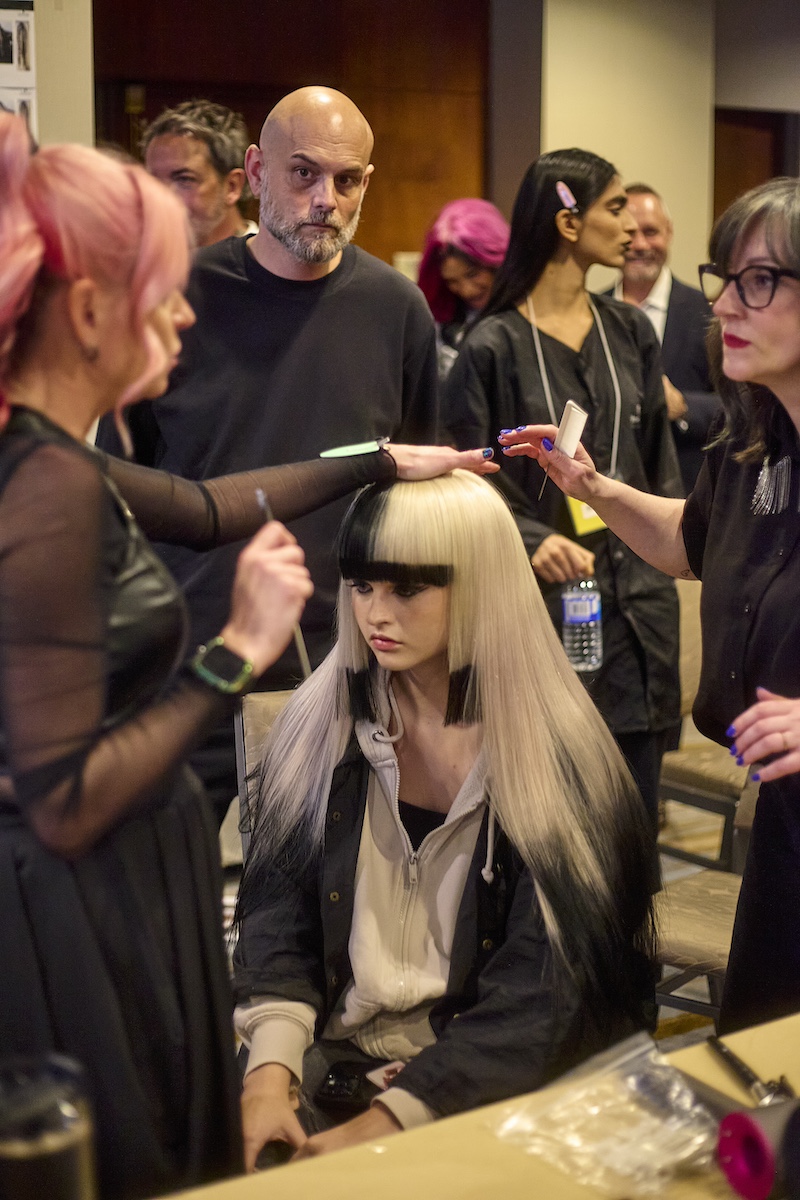
For Eclipse, Nicole Pede was our lead. Nicole and I worked together to come up with the vision for those looks, along with Erinn as well. We all worked together, but Nicole really took on the colour, styling and finishing for those key looks. I think the idea was that we really wanted to go with this black and white theme, but I was adamant about using cream, not white. All the materials that were used and any type of blonde that we did, we made the perfect balance toning shades to be cream and not white, which is a challenge for any hairdresser to create cream and not white, and then also building in black and white, like black tips and white tips with colour melts. It looks simple but it’s really difficult [to make sure that] the black doesn’t bleed into that blonde and makes it silver.
Also for the looks, we wanted to have this “cool kids” vibe. Erinn brought those two words together, so it’s like “cool kids in the apocalypse.” We were trying not to go too deep into that and still remain in this high-fashion world, and that’s where I think a lot of the hair came into that. Nicole did a beautiful job of graphic colour work on one of the first key looks that was actually a super long wig—I think it was a 36-inch wig—and even though we ordered it in black, we coloured it black to really give it that “Schwarzkopf” polish. Then, building in wefts upon wefts that were coloured with the blonde and black graphics. Those were glued layer by layer, so that we have this super long hair. Then the graphic, just like a puzzle piece, fits in.
The intro girls with the black-and-white ponytails were one of my favourite looks of the whole show.
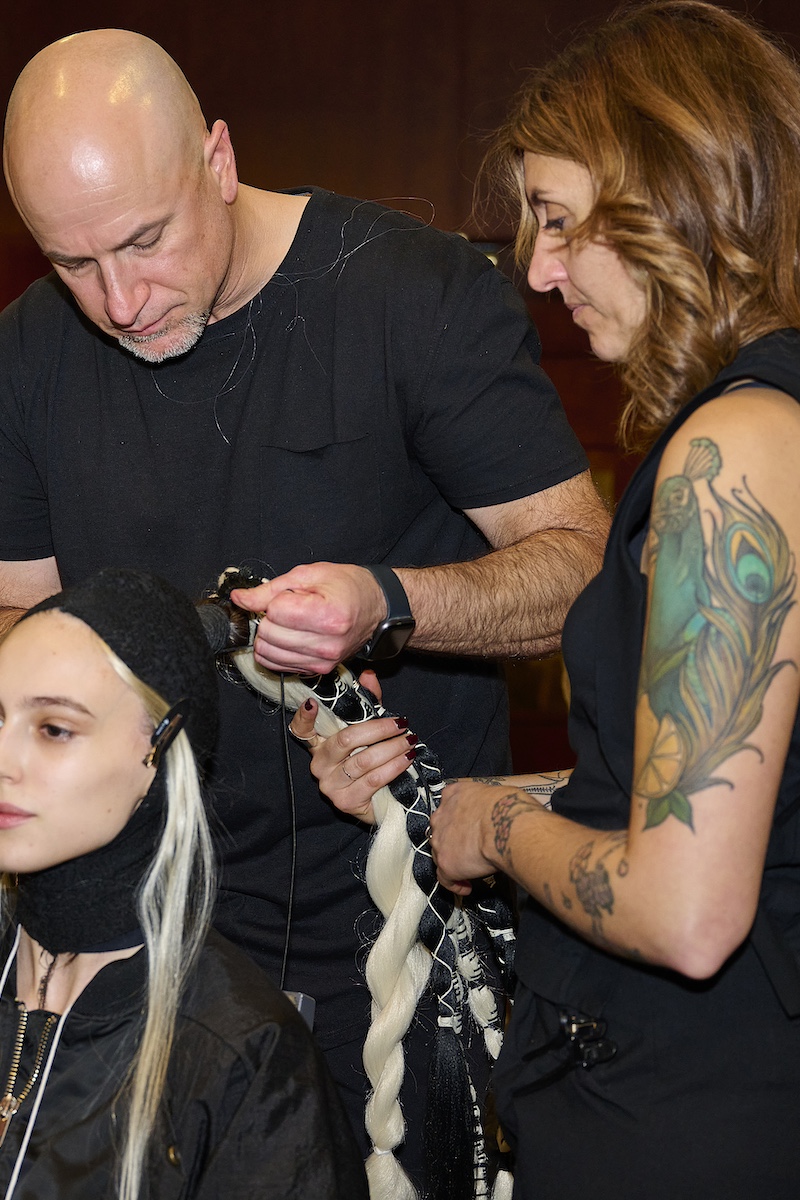
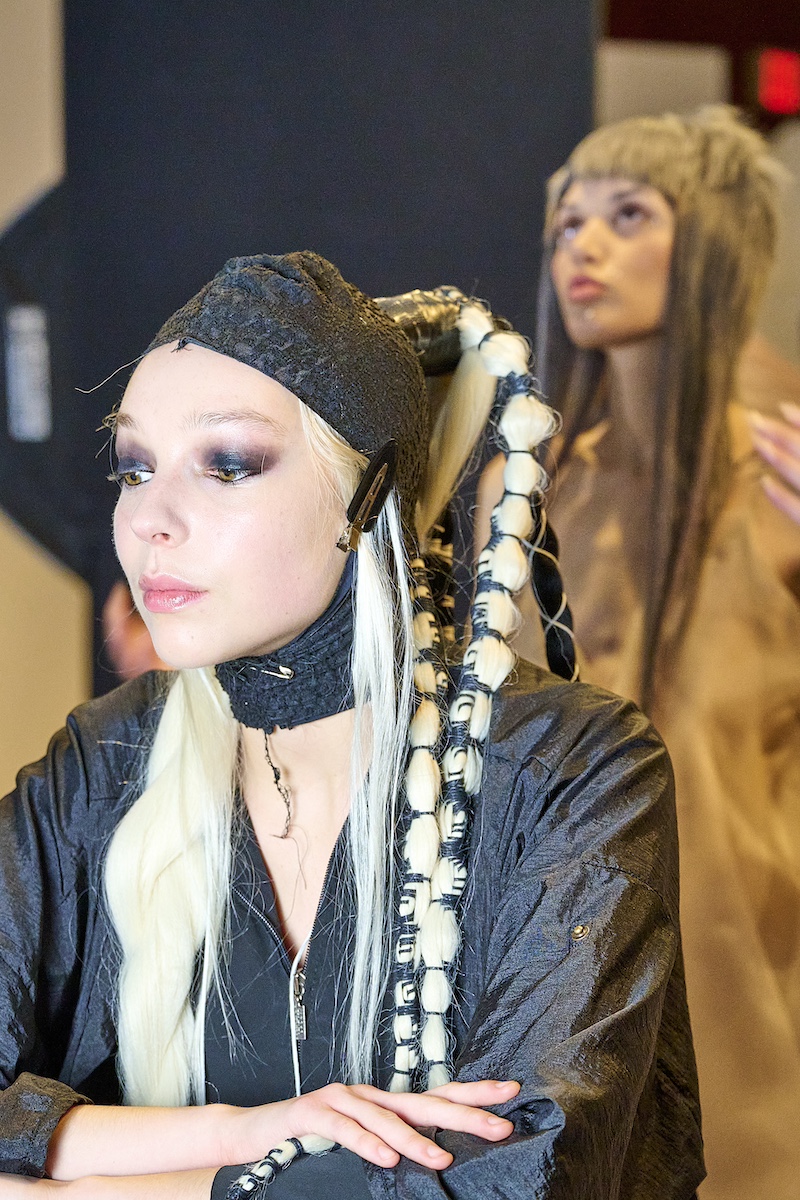
Erinn De Luca: That was just another one of those looks that sort of pivoted and evolved over time, but there’s so much intricate detail that Michelle built into those ponies—things like five-strand braids with leather woven in, zip ties, and there’s all kinds of stuff to create this texture from afar.
Michelle Oliver: It started with an idea of just a cream-blonde pony. Then, we started looking at the different textures and thought, “Maybe we do use some zip ties, that feels a little primitive and kind of apocalyptic.” We kept looking at all these inspirations and they almost came together into this texture. We were going with black with blonde and blonde with black, and then it just like an evolution of a lot of different inspirational looks.
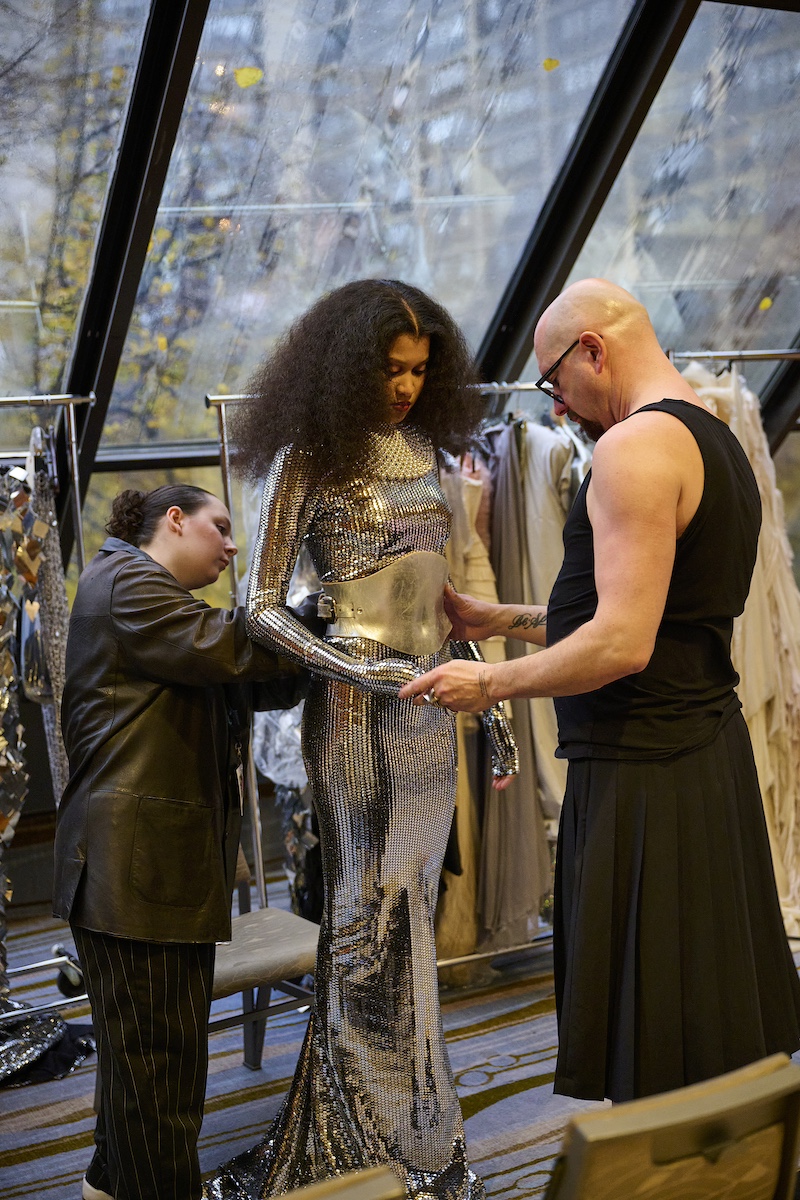
Erinn De Luca: [For Interstellar], we wanted an almost punk vibe. So we moved from these minimalistic looks with these kind of cool kids and, as Michelle said, a nod to Rick Owens, into something that does feel more intergalactic and futuristic, but not your stereotypical with super high shine and things like that. We wanted it to have this edge to it with punk and, at one point, we did get a little Mad Max [inspired] with some of the inspo. Then, bringing in texture and working on beautiful braid work and natural texture.
One thing that we really loved with this world specifically was the contrast of colour. We had this silver wardrobe, but we wanted to go really worn with the makeup, hair and the background to create the contrast and pop there. So one of the things we did was weaving in all of the Schwarzkopf Professional auburn tones, deep coppers and warm browns. I think that complemented the braid work so well because you could see it from far away. You could really see the intricacy of some of those braids.
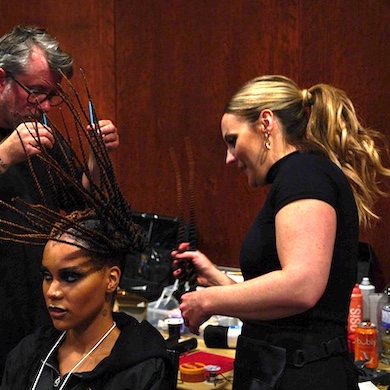
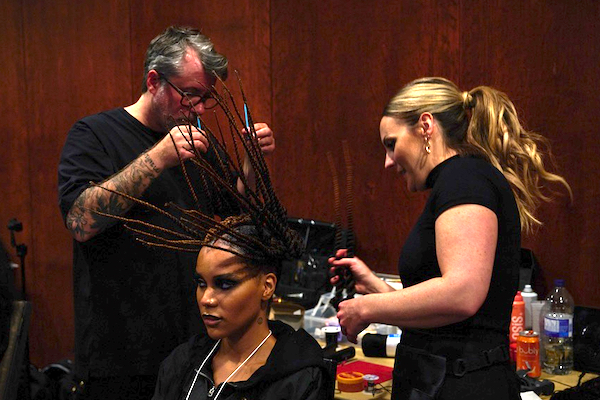
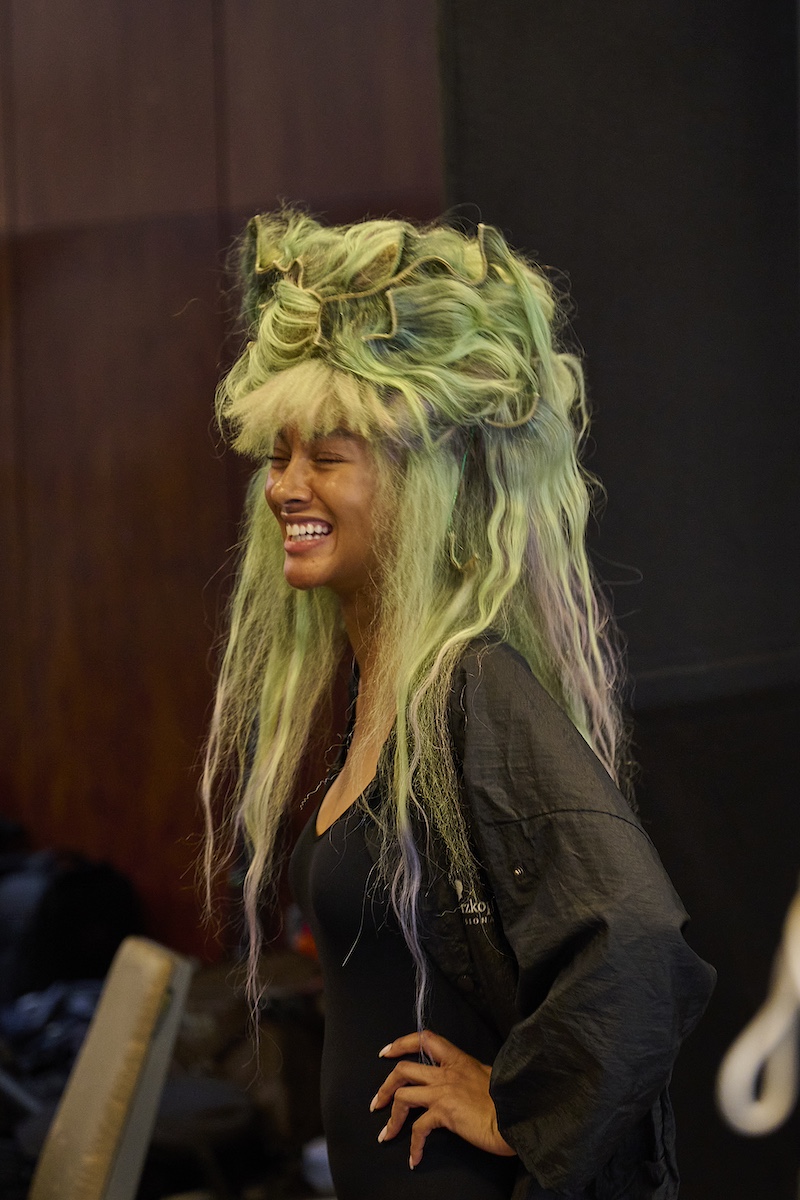
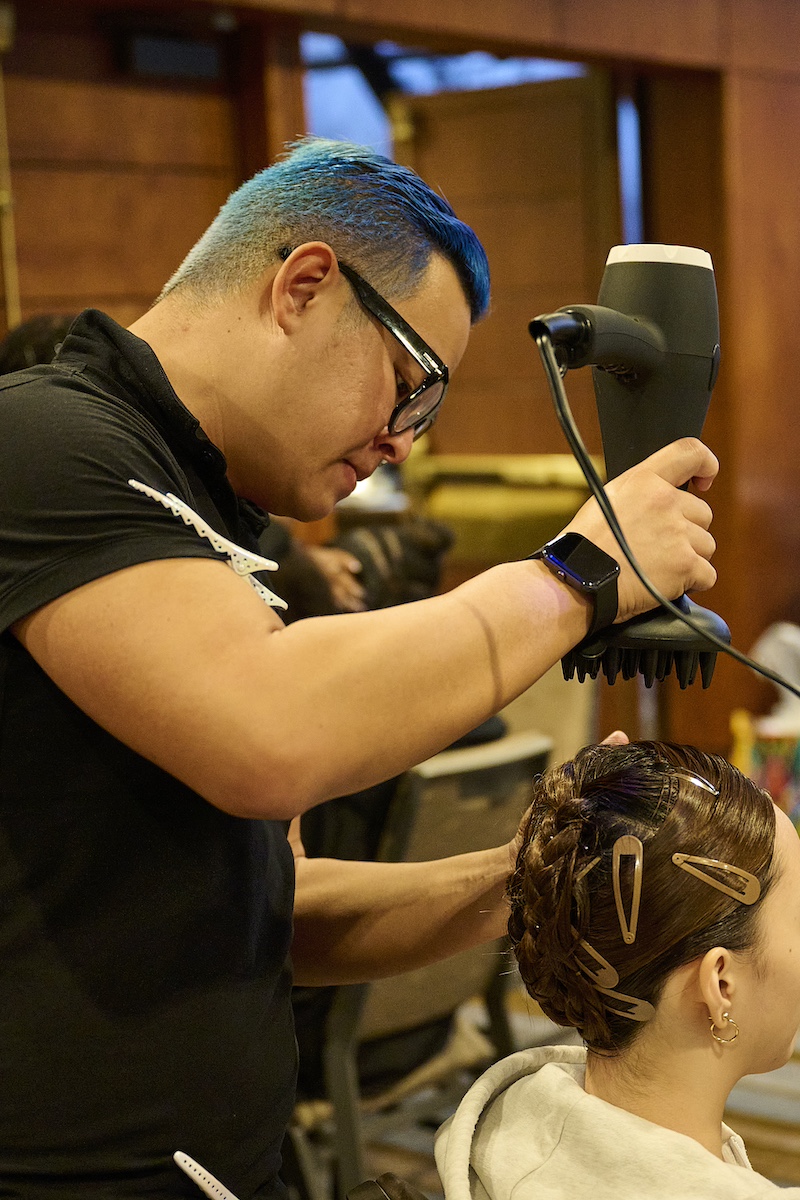
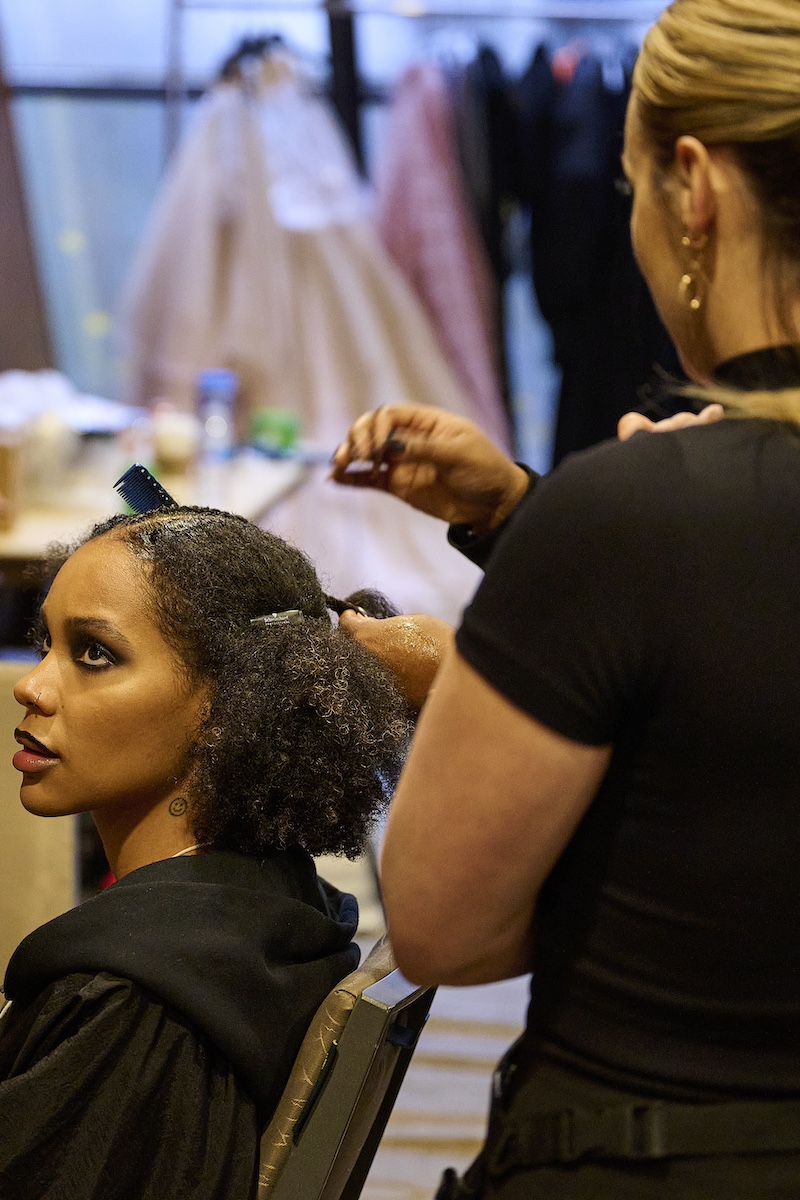
Michelle Oliver: The biggest part with the braid work was building sections that could be attached during the backstage prep, so all of the braids were done in advance. Everything that you saw was attached to the models’ hair when they got there. We worked with their natural texture. For one of the looks—the giant geometric one—it’s inspired by African threading, which is a specific technique of wrapping grates with additional hair; and this is an avant-garde version of that, which we’ve been seeing in certain competitions and things like that for the last little bit. I had three and a half hours to do all of those looks, but that look alone would take three and a half hours, so all of the hair wrapping on the braids was done in advance.
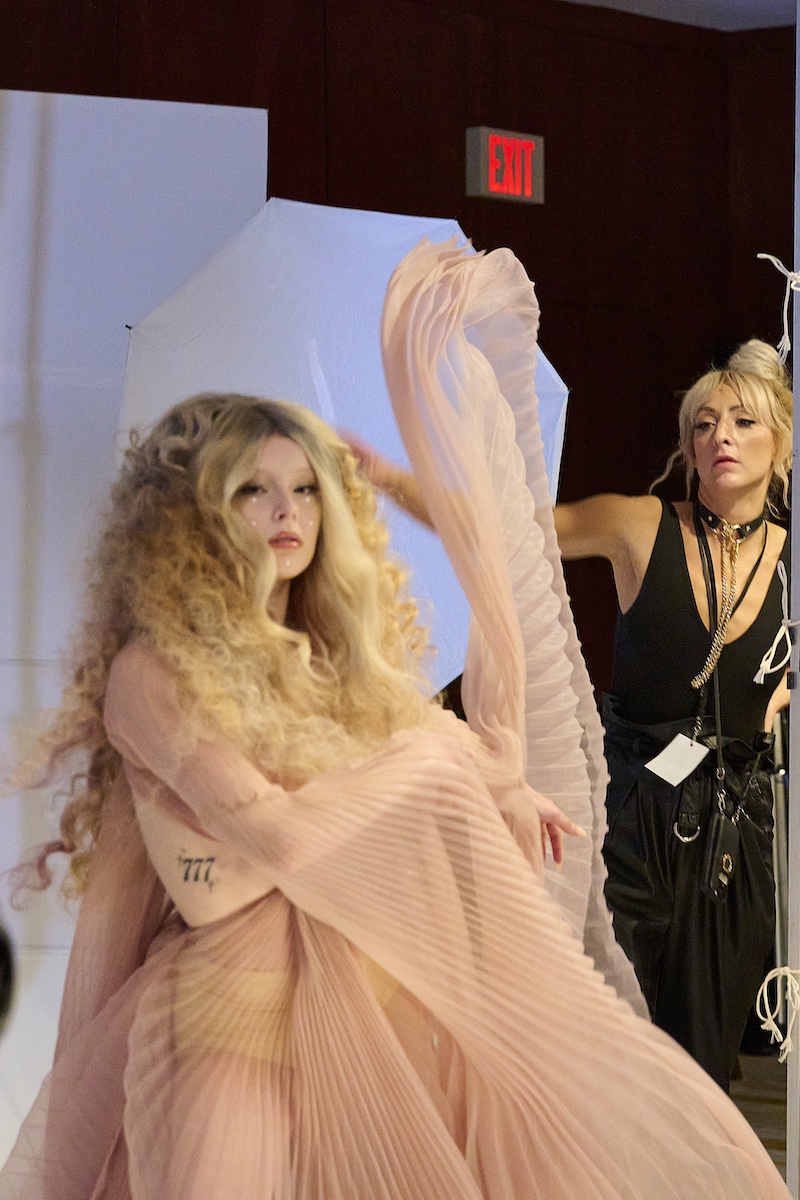
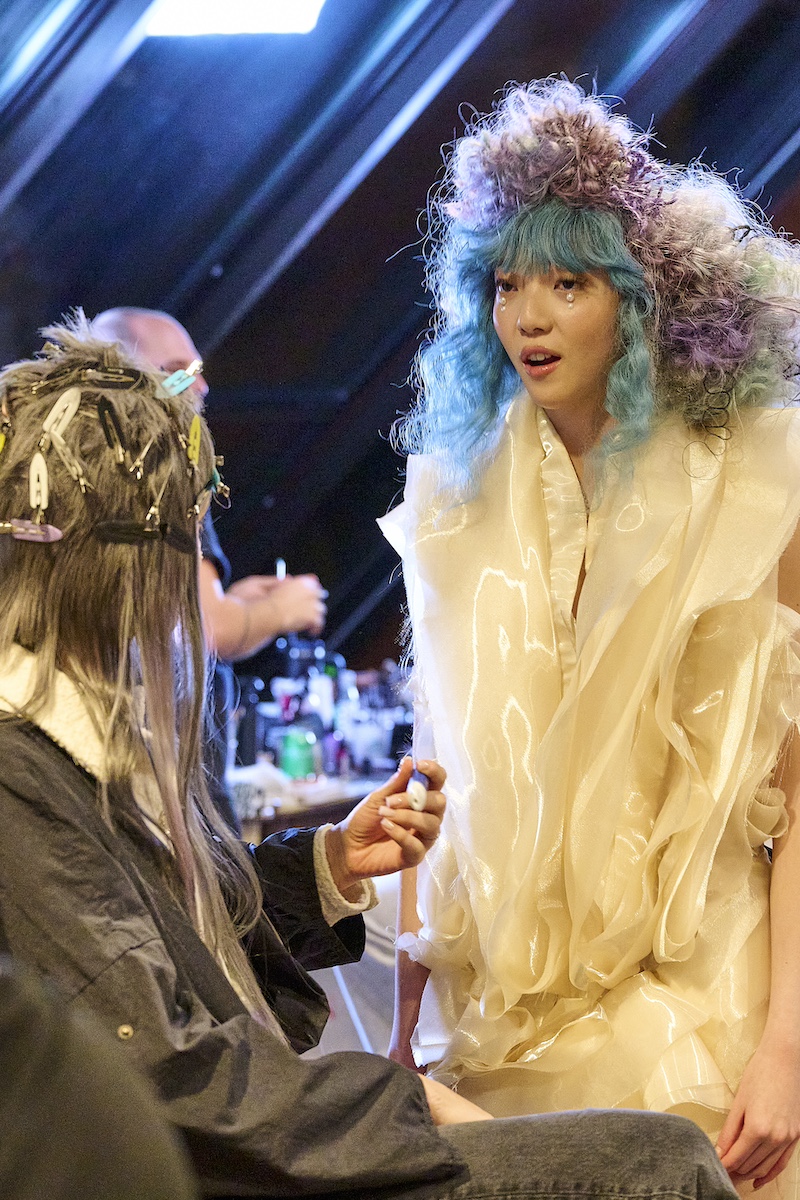
Erinn De Luca: Ethereal was our water world. The idea was that this was going to land on this very peaceful water, when it comes to the hair as well as the wardrobe moving. But when we started to integrate colour palettes into it, it needed to feel dusty and water-like at the same time to really complement each other. If you imagine things that are sort of sun-bleached over time or have been washed by the waves, then you see this fluidity in the colour, but it’s not insanely intense. It’s got a muted feel to it, which is a colour palette that Schwarzkopf Professional does really well, when we’re talking about pastels and more funky tones. It does have that very polished, high-end look that’s a little less vibrant, more muted, but very expensive looking.
This whole segment was led by Robin LaChance when it came to the creation of the actual hair and the avant-garde structures that she was able to make in different textures. So detailed as she always is. But in building the colour palettes, it was multiple test strands and multiple colour stories.
There was one look that had this beautiful cone texture that almost looked suspended, and it was inspired by coral and things like that with all these different pastels: soft violets, blues and grays, which was sort of the anchor throughout everything.
What did it mean to you to have Schwarzkopf Professional’s Canadian artistic team involved in this presentation? Why was it important for everyone to get a chance to participate?
Michelle Oliver: Our team has grown so close over the years that when this opportunity came up, I knew that we had the capability to do this as a team and I wanted everyone to be involved. I think the most important thing that we can do as a team is not to have these big egos in the house, but to build each other up. Ever since I’ve started this role, I feel like that’s my goal because when you feel empowered, uplifted and a part of something, it changes the way that you move through the world. We want to be a team that is strong and that everybody feels like they’re a part of it.
Erinn De Luca: Also, I think we recognize the vast difference in talents that everybody on the team brings as an individual. We all have amazing sets of skills, but there’s something that everybody sort of specializes in and brings something different to the table. What was cool is when it came to the Canadian artistic team with the concept of the show and the view of each one of the worlds and the models that would be in place, everybody signed up for the role they wanted or what they wanted to support. Everybody jumped in where they felt like, “This is something that I really want to contribute to and even though it might not be in my comfort zone,” or “I really am vibing with this look or the feeling of this world,” and that’s where they wanted to place themselves, so I thought that was really cool.
What are some of the key takeaways you were hoping for from the presentation?
Michelle Oliver: I wanted people to feel goosebumps. I wanted people to just go, “Wow, that was beautiful to watch!”
We haven’t done a show at this level for a long time, and I think because we do have so much talent, sometimes you don’t always get a platform like this to say, “We’re Schwarzkopf Professional and this is what we can bring to the table.” And we just want to be able to inspire people. Then, have people talk about it. I wanted people leaving going, “Wow, did you see that? That was amazing!”
Erinn De Luca: It was important for us that there was that ending shot where all three worlds came back onto stage, and you saw the variety of looks that we produced; the variety of colours, the variety of avant-garde structures, how many models there were, and the diversity. We wanted people to feel the magnitude and the variety, and that there was something for everyone to just be wowed by. That was our goal, so I hope we achieved that. I think we did. I know our team is very proud of the work they put forward and we’re so proud to have such amazing people on our team that we get to work with, day in and day out, that we get to create with. I think this just satisfies and fills our cups so much.
What was Schwarzkopf Professional’s key objective with this presentation? What were you hoping to achieve as a brand?
Erinn De Luca: From a brand perspective, this was very important, especially because our Canadian artistic team had a new name that was introduced in 2023. We are so lucky that we have such long-standing dedicated members on our team.
And really, it was about showcasing the work that they’re able to do. When you partner with Schwarzkopf Professional, this is who you’re also partnering with. These are people who are not only are creating amazing collections and inspiring the masses, but they’re also the ones teaching their own classes that they’ve created on behalf of Schwarzkopf Professional—we call them partners and craft classes that also are spreading the Schwarzkopf professional cutting and styling message to salons, academies and classrooms across the country. Having one thing that we all created together and put on display for all of Canada to see, and then understanding that these are the people that you have access to when you partner with our brand.
Michelle Oliver: Showcasing our colour was a huge piece in that. We had three areas that we wanted to present: Blondes, reds and coppers, and, of course, more of that fantasy pastel direction.
We haven’t had this level of an avant-garde show since pre-COVID. To me, as well for our brand, it’s letting people know, “We’re here. We’re back. We have a lot more to show. This is just the beginning.” and getting that brand awareness of events and what we put into them and where we want to go. If you’re going to come and join anything that we put on, then you can expect a top-quality experience.
In addition to spotlighting your team’s talent, how can a stage presentation at the Contessa Awards help with attracting new talent to your team while also showcasing the opportunities and products your brand can offer?
Michelle Oliver: When you go to the Contessas, you’re in the room with the top talent in the country. You have some of the most passionate hairdressers in the country in that room. And not just from your brand, but from the biggest, most impactful brands in the business. There is no better place in Canada to put on a show like that if you want to impact beyond your circle. This is a huge opportunity because of that. That definitely is part of the conversation because you’re getting exposure to people that might not see your show. They might only go to whichever salon brand that they’re already using.
We’re always looking to build, but also to reach the next generation and to think about that. There’s mentorship on our team, which is part of what’s so beautiful about it. We always want to be thinking about how we, as a company, are impacting and how we’re bringing in more business, clients and artists, so it’s a really amazing opportunity with Contessas to be able to do that with an inspirational show.
Michelle, you’ve won several Contessa awards before. What did it mean to you to lead a presentation on the Contessa stage?
Michelle Oliver: It felt almost unreal. I think because I started very early in my career competing—I was only doing hair for about four years when I entered my first Contessa—and if you would have told me at [age] 24 that I would be leading a show at this event at 42, I would be like, “You’re crazy!” I hadn’t even joined an education team at that time. Almost 20 years later, actually leading a creative and inspirational show like this, it was an honour. The respect I have for the Contessas is unmatched. I really believe in the competition, the talent, and the way that the event is run.
To be able to put on a show for people that have inspired you for 15 to 20 years—a lot of the people in the audience are people that I’ve looked up to my entire career—it’s a lot of pressure, just because I care so much. But it’s a real honour and a full-circle moment to find yourself backstage, watching a show go on when you’ve experienced every level of what it’s like to be in the audience and to be a part of the event.


Comments are closed.