

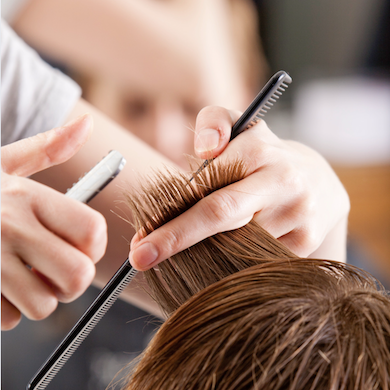
Want to add movement and soft volume to long, one-length hair without sacrificing length? Sam Villa’s Shift Cutting method, demonstrated with his Signature Series Razor, offers a strategic approach using dry cutting, purposeful sectioning, and mindful body positioning. Ideal for clients wary of layers, this technique creates seamless, airy results that grow out beautifully.
How To:
Step 1: Break the hair into five vertical sections, then further divide each section into top-to-bottom subsections. Each subsection will be cut alternately from right to left and then left to right—creating an intentionally erratic pattern that encourages movement and dimension.
Pro Tip: Use dry sectioning clips to keep each main section and completed subsection separate and organized. Place the clip in the same direction as your last cut to help remember where to start next.
Step 2: To determine where to cut, hold a subsection and gently bend it into a “C” shape. Where the curve ends marks the shortest point of the layer. This ensures layers are tailored to the natural fall of the hair. Cut only the first three out of every four parts in a subsection—leave the last part untouched to preserve some fullness. For clients with less density at the front, reduce this to two cuts per subsection. Always adjust behind the ears based on hair density.
Step 3: A razor is an emotional tool—tight grip = aggressive texture, while loose grip = soft results. Hold the razor lightly and angle it diagonally (not perpendicular) so it slices cleanly through the hair. To create consistent tension, overlap your middle finger on your index finger while holding the section. This added tension helps the razor glide smoothly and evenly.
Step 4: When cutting in alternating directions, your body position matters. If you’re right-handed and cutting from left to right, stand on the left side of your client’s head to maintain a clean short-to-long cutting angle. This ensures comfort, control, and visual accuracy.
Step 5: At the hairline, use diagonal forward sections, over-directing the hair back and cutting from short to long. This allows the hair to fall away from the face naturally, creating softness around the perimeter and blending effortlessly into the longer layers.


Comments are closed.